Nutshell Film Reviews: Ender’s Game, The Book Thief, Catching Fire

I have been a bad blogger lately. I’ve been reading good books and seeing good movies, yet my reviews are few and far between. I blame this on the holidays, and writing, and critiquing, and children, and travel, and the Internet, and Netflix, and queso. Since none of these things are going away any time soon (*whispers I love you queso*) I figure it’s best not to stress about it, and to give you what reviews I can, when I can.

Because really, I know you’re all waiting with bated breath to hear what I think before you decide what book or movie to see next. Right?

(And as a general reminder, reviews from me are also a bit sporadic because I only review what I can also recommend. So I’m reading more books than I’m writing about. Thankfully not a lot more — since life is too short to read bad books — but still, more.)

Anywho, I had lofty plans to write detailed reviews on each of the book-to-film adaptations I’ve seen in the theaters recently, but alas, I just don’t think that’s going to happen. So instead, you’re going to get three mini-reviews, and you’re going to like it.

Okay, maybe you won’t like it. That’s really not up to me. Sorry, got a bit presumptuous there.

The three films I’m going to be talking about are vastly different, their only common denominator that they are all based on books written for young adults, and that they are all books I really enjoyed. They are Ender’s Game (novel by Orson Scott Card), The Book Thief (novel by Markus Zusak), and Catching Fire (novel by Suzanne Collins).

Before I get into the individual reviews, let me mention a few of my opinions that apply to all three movies. First, I found the casting brilliant in all of them (with a couple very minor exceptions) and the acting superb. Even when an actor didn’t look like how I pictured a character from the book, their embodiment of their character more than made up for it. I tend to be pretty forgiving when it comes to actors physically matching character descriptions anyway — to me, the feel of a character is far more important than whether they have the “correct” hair or eye color — but even if I was more of a physical purist, I think I could have forgiven most of the times when casting drifted significantly from the way a character was described in the book, simply because the actor was the character.

I also thought the effects in each film were fabulous. Granted, they were certainly more noticeable in Ender’s space-and-explosions setting than in the historical town of The Book Thief, but none of them had effects that made me roll my eyes or felt at all cheesy. The effects were well-integrated and appropriate, and really helped bring each world to life.

Also, each film had a fantastic score. I’m a sucker for a good soundtrack, and I thought all three of these soundtracks perfectly accompanied the stories being told. Book Thief‘s was simple and haunting, Ender‘s was tense and epic, and Catching Fire’s seamlessly wove between the over-the-top anthems of the Capitol, and the subtler, more intimate melodies of the Districts. All three scores were beautiful, and I’ve already added Ender to my writing playlist.

Okay. With that out of the way, let’s talk about the films themselves.

Ender’s Game

I really, really enjoyed this film adaptation, but after talking to other friends who have seen it who have and have not read the book, I’m willing to admit that it’s possible that this film will appeal far more to those who come into the movie already familiar with the story. The movie made some significant changes to the book, streamlining the complex and nuanced narrative down to its core elements to fit into a 2-hour film, and either truncates or eliminates many of the subplots that give the story its texture. So while I don’t think the movie would have confused someone new to the story, it may not have resonated as much with them. Most of Ender’s internal struggle as he adjusts to Battle School is only hinted at, and we lose almost all of the back story of him and his siblings, which sheds significantly more light on his character. The Mind Game that Ender plays, through which his commanding officers are psychologically evaluating him, also only gets a brief scene, as opposed to being a common thread running all throughout the story. In addition, I could have used at least one or two more Battle Room sequences, where Ender is honing his command style, because that would have really helped the audience understand how his brain works, and why the adults in the movie have so much faith in him. (Plus, Battle Room sequences were my favorite parts of the book and the movie, so I could have happily sat through another half hour of them at least.)

That said, there were other changes I was totally fine with. For example, Book!Ender is probably a good 5+ years younger than Movie!Ender, and this pretty much applies across the board to all the kids. Truthfully, if they’d kept the characters elementary-aged prodigies like they are in the book, it would have been nearly impossible to find child actors who could portray them accurately. They also changed the gender/race of several of the adult characters, and/or combined multiple characters into one, and I thought it worked really well. Also, they updated the graphics Ender and his jeesh see on their displays (the book came out in the ’80s, and as such, has ’80s-era graphics notions), for which I was highly grateful.

The one casting decision I was a little torn on was the character of Bonzo Madrid. The actor was a perfect Bonzo — seriously, I can’t imagine anyone playing his personality better — but by casting a kid who was smaller than Ender, it didn’t seem like quite so much of a David-and-Goliath situation, and therefore didn’t evoke the same kind of tension that their relationship evokes in the book.

However, I still thought Ender’s Game was a great adaptation of one of my favorite books, and that even though it at times felt a bit rushed, it’s still a wonderful story that was amazing to see brought to life on the big screen. If you’re a fan of the book, try to catch it in theaters. If not, it’s worth checking out on Redbox or Netflix in a few months.

The Book Thief

I spent this entire movie in awe of how perfectly it captured the spirit of the book. Even the feel of the book — the drifting, hazy quality that comes from having Death as the narrator — translated to the film. I know I already mentioned that I was a fan of the casting, but I need to give a special shout-out to Sophie Nélisse, who plays Liesel. She was absolutely stunning in the role, and I hope to see her in many, many more films in the future.

There were some minor changes and a few parts missing from the book, but I didn’t miss any of them as I was watching. It was only after leaving the theater and discussing it further that I realized changes had been made. The experience of watching the movie was riveting and immersive, and I was moved to tears over and over (seriously, bring tissues). Each moment of the film felt purposeful and thoughtful, and I have to believe that the writer, director, and cast must be devoted fans of the book to have translated its essence to film so beautifully.

While some events of the book were streamlined or skipped, the movie never felt rushed. The plot was extremely easy to follow, and each of the characters developed wonderfully well. I went to see the film with a friend who had never read the book, and she also adored the movie, so while I still absolutely recommend everyone reads the book, it’s not a prerequisite to enjoy the film.

Bottom line, I thought The Book Thief was a thoughtful, moving, beautiful film that will both satisfy fans of the book and enthrall new fans. It’s adapted from a YA novel, but I believe it will appeal to viewers of all ages, from early teens to great-grandparents. And while it tells about one of the darkest times in human history, it does so in a manner that is sensitive and quietly uplifting without becoming saccharine. It recently opened in wide release, so go look up showtimes and get thee to a theater.

And again. Tissues. I cannot stress this enough.

Catching Fire

I’m going to preface this with the obvious: Catching Fire is a sequel to The Hunger Games, so if you haven’t seen the first one, you should probably do so before you see the second.

THAT SAID! If you saw the first one and weren’t pleased with the deviations from the book, or the extensive use of shaky cam, this one is so much better. (Disclaimer: I really liked the first Hunger Games movie, but I can see why some didn’t.) And if you did like the first movie, prepare to love the sequel.

Catching Fire takes all the best parts of The Hunger Games — the excellent cast, the glorious and appalling extravagance of the Capitol, the musical themes, the visceral sense of the Games — and takes them up a notch, in addition to fixing most of the problems with the first film. Gone is the nausea-inducing shaky cam, the significant changes from the book for the sake of action or shock value.

This film relies far less on putting the viewer in the Games, and more on making the viewer feel Katniss’ and Peeta’s gamut of emotions as they are flung back into a fight for survival. While the first film definitely wrung a few tears from me, I was a mess for most of Catching Fire. Secondary characters that I enjoyed in the first movie — Haymitch, Effie, Cinna — are fleshed out and humanized in this one, and we also are introduced to two of my favorite series characters, Finnick Odair and Johanna Mason.

Again, I know I already mentioned casting, but I need to give a shout-out to Sam Claflin and Jena Malone, who portrayed Finnick and Johanna, respectively, because they were perfect. Neither of them is who I pictured when reading the books, but I can’t imagine anyone doing more justice to the characters. Their scenes were my favorites in a movie full of amazing moments (which is doubly saying something, since Peeta Mellark is one of my favorite fictional characters ever).

Catching Fire is my favorite book in the Hunger Games trilogy, not only because of the amazing characters, but because I like how it digs deeper into the turbulent climate of Panem, and how while we do get a second set of Games, how we experience them is totally different. This time, Katniss is not a lone wolf, but a member of a team. This time, it’s not children in the arena, but adults. And this time, although they ostensibly have the same mission, the underlying tone is that they’re fighting for something far greater than survival. And all of this was somehow even more effective in movie form than in book form. I thought this film did a stellar job in driving home the toll the Games take on the Districts, the savage mercilessness of the Capitol, the horror of the tributes and their families, and the psychological trauma that plagues even the “winners” of the Games. And I thought it set up audience expectation going into the third movie (which is going to be painful) masterfully.

My one quibble with the film was that it still harped a little too much on the supposed “love triangle” (which I still maintain does not even exist in the books), which made Katniss more wishy-washy and hormonal than she should be, given the events going on in her life. I think the filmmakers are shooting themselves in the foot, giving themselves an unnecessary uphill battle in pulling off the end of the trilogy convincingly, all in the name of being able to print more “Team Gale” and “Team Peeta” t-shirts. But it’s a minor quibble, and I can overlook it in light of all the other major things the film got so, so right.

Overall, I can honestly say that not only was Catching Fire one of my favorite movies of the year, but one of my favorite book-to-film adaptations ever. It made me laugh, gasp, and cry on more than one occasion (this is another movie where I must stress, bring tissues). My theater burst into spontaneous applause and cheering at several parts. The cast, the visuals, the direction, and the storytelling were all spot-on. I don’t say this often, but the film was, in my opinion, better than the book. If you are a fan of The Hunger Games, whether in book or movie form, Catching Fire does not disappoint. I’ve already seen it twice in theaters, and may need to see it again. It’s that good.

OKAY. THAT WAS A LOT OF TYPING.

So those are my thoughts on the latest YA book-to-film adaptations, now playing in a theater near you. In non-book-adaptation news, I’ve also seen Thor: The Dark World (twice) and it is also pretty awesome. SO much more of all the things I wanted more of after the first movie (and yes, this includes LOTS more Loki).

Hopefully soon I’ll review some books on here. I spent most of November reading and critiquing friends’ manuscripts (coming down the eventual pipeline to a bookstore near you!), but am now finally caught up and back on the reading-books-currently-on-shelves bandwagon. Right now I’m reading ALLEGIANT, which I’ve managed to NOT SPOIL for myself yet, so please, I know it is polarizing but DON’T TELL ME WHAT HAPPENS. Please and thank you.

In the meantime, seen any good movies lately?

Cover Reveal Celebration + Giveaway: The 57 Lives of Alex Wayfare by MG Buehrlen

It’s time to PAR-TAY!

MG Buehrlen is one of those online friends that it sometimes feels weird to refer to as a friend, because we’ve only met via social media and email. But we’ve bonded over our shared affection for coffee and Gilmore Girls and Bill and Ted’s Excellent Adventure, so I’m pretty sure we’d do okay. Which means I was super excited earlier this year to hear that MG sold her debut novel, The 57 Lives of Alex Wayfare, not only because I am thrilled for her, but also because it’s a time-travel adventure, folks, and I really can’t get enough of those in my life.

Are you excited? I’m excited.

Today we’re celebrating the cover reveal for THE 57 LIVES OF ALEX WAYFARE by MG Buehrlen with a guest post and a giveaway!

BONUS POINTS: Mention you saw the cover on my blog (when you fill out the giveaway form below) and you can earn extra entries!

Before we get to the cover, here’s a guest post from MG:

5 Things an Author Hopes for in a Book Cover – Guest Post by MG Buehrlen

Waiting for a book cover to arrive can be a nerve-wracking experience for an author. There are so many things you hope for! Here are the top 5 things I hoped for while waiting for cover art from my publisher.

1) To get a say in the cover design.
Every author hopes their publisher involves them and their opinions in the cover design process. Many publishers don’t. They simply hand the author a cover and that’s that. But my publisher, Strange Chemistry, listened to my ideas and feedback throughout the entire process, which is rare in the industry. I’m so appreciative for the chance to collaborate with them on the design.

2) To have kick ass typography.
We went through quite a few fonts, trying to find the one that fit the mood and theme of 57 LIVES. I think we’ve done it.

3) To have the cover depict a scene from the book.
Don’t get me wrong, I love abstract covers, covers that are title-centric, and even covers that are pure symbolism. For 57 LIVES, though, I wanted the cover art to be something readers come across between the pages, so they can flip back to it and feel like they’re in the story.

4) To have artwork that catches the eye and stands out on the shelf.
The colors, the depth of field, the light — I definitely think this cover will stand out on the bookstore shelf. It’s mysterious enough to draw you in, and eerie enough to make you wonder what the story is all about.

5) To see a part of the book’s world brought to life.
The main character in 57 LIVES is Alex Wayfare, a girl who can travel back in time to her reincarnated pasts by accessing Limbo, the space between Life and Afterlife. What you see on the cover is Alex standing in Limbo. I love seeing Limbo brought to life. It makes it feel all the more rich and real. It’s no longer just in my head. Now it’s in the reader’s as well, and that feels magical.

Ready to see the cover? Here it is!

(Lauren again) What do we think, friends? My reaction can be pretty well summed up like this:

I love the dark and mysterious graphic in combination with the playful font. Makes me think this book will be equal parts serious, high stakes combined with fun timey-wimey goodness. (I could be wrong. I haven’t read it. But I have a good feeling about my hunch.) Plus, I think this cover will appeal to both boys and girls and bridge a variety of age groups. I can’t wait to add it to my shelf!

About the Book

One girl. Fifty-seven lives. Endless ways to die.

For as long as 17-year-old Alex Wayfare can remember, she has had visions of the past. Visions that make her feel like she’s really on a ship bound for America, living in Jamestown during the Starving Time, or riding the original Ferris wheel at the World’s Fair.

But these brushes with history pull her from her daily life without warning, sometimes leaving her with strange lasting effects and wounds she can’t explain. Trying to excuse away the aftereffects has booked her more time in the principal’s office than in any of her classes and a permanent place at the bottom of the social hierarchy. Alex is desperate to find out what her visions mean and get rid of them.

It isn’t until she meets Porter, a stranger who knows more than should be possible about her, that she learns the truth: Her visions aren’t really visions. Alex is a Descender – capable of traveling back in time by accessing Limbo, the space between Life and Afterlife. Alex is one soul with fifty-six past lives, fifty-six histories.

Fifty-six lifetimes to explore: the prospect is irresistible to Alex, especially when the same mysterious boy with soulful blue eyes keeps showing up in each of them. But the more she descends, the more it becomes apparent that someone doesn’t want Alex to travel again. Ever.

And will stop at nothing to make this life her last.

Pre-order The Fifty-Seven Lives of Alex Wayfare now!
Barnes & Noble|Books-a-Million|Amazon|Indiebound|The Book Depository

About the Author

When she’s not writing, M.G. moonlights as a web designer and social media/creative director. She’s the current web ninja lurking behind the hugely popular website YABooksCentral.com, a social network for YA (and kids!) book lovers.

These are the places you’ll find M.G. hiding: in her creaky old house nestled in Michigan pines, sipping coffee on her porch, cooking over campfires, and dipping her toes in creeks. Say hello to M.G. on Twitter, Facebook, and Tumblr.

Giveaway Details

One winner from each participating blog (10 total) will receive signed bookmarks and stickers.

One grand prize winner will receive a copy of the book (once available) as well as the Mega 57 LIVES Character Prize Pack (each item pertaining to a significant character in the book):

– A pair of black Wayfarer glasses, like Alex wears
– A pack of chocolate pudding cups, courtesy of Jensen
– Vintage piano sheet music for the song Star Dust, the song Nick plays for Alex
– An orange Baltimore Orioles cap, like Porter wears
– A pair of engraved Polygon game piece stones (You’ll have to read the book to find out how these come into play!)
– A YABooksCentral.com tote bag
– Signed bookmarks and stickers

This giveaway is open internationally. Winners will be chosen and notified by email within 30 days of the giveaway end date.

To enter, fill out the Rafflecopter form below. Extra entries can be earned by following the bloggers involved in the Cover Reveal Celebration.

a Rafflecopter giveaway

Review: Winger by Andrew Smith

A few weeks ago, all my local writing friends started gushing over a book on Twitter. A book I’d never heard of, but they swore up and down and left and right was spectacular. Winger by Andrew Smith. I knew nothing about it except that they were hashtagging all their tweets #Iamsuchaloser and that was intriguing. So I threw out a request to the Twittersphere, “Who’s going to lend me a copy of WINGER?” Within minutes, I had a volunteer. And within days, I had a copy in my hands.

It took me a few days to start reading. Again, I literally knew nothing about this book. Except that somehow, being a loser came into play, and somehow, that was…good?

I wasn’t so sure how I felt about the cover. I mean, there’s a guy with a bloody nose on the cover. Gross.

But after a few days, I picked it up and cracked it open. And then. Then.

Oh. My. Word.

The best way I can think to describe it is Dead Poets Society, but funny. But really that’s not it at all, because this book doesn’t focus around a student-teacher relationship, and instead of poetry there is rugby, and also there are girls. And yet that is the closest comparison I can come up with to convey the spirit of Winger…without actually making a good comparison.

*sigh* I suppose I should just get to it, eh?

The Plot (From Goodreads): 

Ryan Dean West is a fourteen-year-old junior at a boarding school for rich kids. He’s living in Opportunity Hall, the dorm for troublemakers, and rooming with the biggest bully on the rugby team. And he’s madly in love with his best friend Annie, who thinks of him as a little boy.

With the help of his sense of humor, rugby buddies, and his penchant for doodling comics, Ryan Dean manages to survive life’s complications and even find some happiness along the way. But when the unthinkable happens, he has to figure out how to hold on to what’s important, even when it feels like everything has fallen apart.

Filled with hand-drawn info-graphics and illustrations and told in a pitch-perfect voice, this realistic depiction of a teen’s experience strikes an exceptional balance of hilarious and heartbreaking.

My Thoughts:

Disclaimer: This review will be slightly spoilery, but only inasmuch as the back cover copy is spoilery. I won’t spoil anything I did not deduce from reading the back cover of the book.

It’s been a long, long time since I read a book that made me laugh out loud more than once or twice. It’s been even longer since I read a book that made me laugh so hard, I had to stop reading and put down the book in order to compose myself enough to breathe. But with WINGER, I was tears-streaming, snot-flowing, short-of-breath chortling every few pages. Ryan Dean West’s self-deprecating (as evidenced by his “I am such a loser” mantra), utterly irreverent and so amazingly fourteen-year-old-boy inner monologue was one of the most refreshing, honest, and hilarious narrations I’ve ever read.

WINGER is light on plot, heavy on character. Ryan Dean (two words, one name. His middle name is revealed late in the game, and a source of his perpetual shame.) stumbles from one encounter to the next, from a midnight poker game featuring ill-advised drinking, to stolen kisses with a girl who is entirely off-limits, to unexpected friendship and awkward first love. He punctuates his narrative with hand-drawn cartoons and graphs to illustrate life as he knows it, which give even the darker moments a glimmer of light.

When the book eventually does take a turn in tone, as hinted at in the back-cover copy, it is, as promised, heartbreaking. I read the whole book waiting for the heartbreaking part, and was honestly a little concerned that it wouldn’t fit with the tone of the rest of the book. I should have had more faith, given Smith’s stellar execution of his story.

Much like in life, tragedy is often hard to anticipate. Ryan Dean drifts along assuming his life is most often a farce, occasionally a romantic comedy, intermittently a coming-of-age-drama. Then suddenly, it is none of those things, and he reacts in an utterly real and — yes, heartbreaking — fashion. There is a tone shift, but it works, and it heightens the feeling that we are experiencing a very real year in the very real life of a very real teen. It is unpredictable but authentic, raw yet beautiful. 

WINGER isn’t going to be for everyone. Ryan Dean is frequently foulmouthed (but only in his head) and crude, he objectifies every female he sees, and makes some truly terrible choices, some of which have far-reaching consequences. But if you can handle the sometimes-brutal honesty of Ryan Dean West, and if you enjoy laughing until coffee squirts out your nose over things that are likely inappropriate, and if you like stories that are hard to put into a box because life is hard to put into a box, then I cannot recommend this book enough. Hands down, one of the best books I’ve read this year. Go forth, losers, and read.

Review: Across a Star-Swept Sea by Diana Peterfreund

When Diana Peterfreund came out with her futuristic re-imagining of Jane Austen’s Persuasion last year, For Darkness Shows the Stars, I highly enjoyed it. I was swept up in Eliot and Kai’s star-crossed love story, and it made me giddy and squishy in the way only Austen can.

So when I discovered there was to be a companion novel — not a sequel, but another story set in the same world, this time to the tune of The Scarlet Pimpernel, I was anxious to read it. And fortunately, a friend graciously offered to let me borrow her ARC (which…I have not yet returned. She had life things and then had life things and what I’m saying is, Friend, if you want your ARC back, let’s do coffee).

Across a Star-Swept Sea does not pick up where the first book leaves off, and you don’t have to have read FDStS to enjoy it…but I’d still recommend first things first. It’ll be better that way.

The Plot (from Goodreads):

Centuries after wars nearly destroyed civilization, the two islands of New Pacifica stand alone, a terraformed paradise where even the Reduction—the devastating brain disorder that sparked the wars—is a distant memory. Yet on the isle of Galatea, an uprising against the ruling aristocrats has turned deadly. The revolutionaries’ weapon is a drug that damages their enemies’ brains, and the only hope is rescue by a mysterious spy known as the Wild Poppy.

On the neighboring island of Albion, no one suspects that the Wild Poppy is actually famously frivolous aristocrat Persis Blake. The teenager uses her shallow, socialite trappings to hide her true purpose: her gossipy flutternotes are encrypted plans, her pampered sea mink is genetically engineered for spying, and her well-publicized new romance with handsome Galatean medic Justen Helo… is her most dangerous mission ever.

Though Persis is falling for Justen, she can’t risk showing him her true self, especially once she learns he’s hiding far more than simply his disenchantment with his country’s revolution and his undeniable attraction to the silly socialite he’s pretending to love. His darkest secret could plunge both islands into a new dark age, and Persis realizes that when it comes to Justen Helo, she’s not only risking her heart, she’s risking the world she’s sworn to protect.

In this thrilling adventure inspired by The Scarlet Pimpernel, Diana Peterfreund creates an exquisitely rendered world where nothing is as it seems and two teens with very different pasts fight for a future only they dare to imagine.

My Thoughts:

The setting for Across a Star-Swept Sea is far removed from the Luddite estate of For Darkness Shows the Stars. The citizens of Albion and Galatea believe they alone survived the Reduction, but the two islands have very different ideas of how to move forward afterward, and each character in the story believes their way is the right one.

There are two main points of view, Justen and Persis, but several secondary characters get a bit of time in the POV spotlight as well, giving us every side of the conflict. The book plunges headlong into the science and politics that propel the revolution in New Pacifica, and the rebellion led by the Wild Poppy. The plot is smart and doesn’t coddle — there’s a lot of world-building and political set-up in the opening chapters, and that complex wider conflict sets the stage for the more intimate, personal conflict of the characters.

Though Justen and Persis team up almost right off the bat, Justen has no idea who she is — not as a spy, and not as a person — and spends the vast majority of the book believing she’s as vapid and shallow as she appears. Meanwhile, Persis has more than a few misconceptions about Justen as well. The false impressions carry us most of the way through the story, which normally I would find galling, but when you are reading a book based on The Scarlet Pimpernel, it’s kind of what you signed up for.

I enjoyed the characters in this story, maybe Justen a bit more than Persis simply because her Persis Flake act started to grate after a while. It was the point (and Persis was sick of it, too), but gave Justen a slight edge. As for the supporting cast, I enjoyed most of them, and was glad that we got to see perspectives of people on both sides of the conflict and from all the different social classes. It gave the story a good bit of variety and texture. I have to admit, though, I became the most invested when some familiar faces from For Darkness Shows the Stars showed up midway through the book. It was nice to revisit the characters I’d grown attached to in the first book and see how they interacted with the new characters in this unfamiliar setting.

Across a Star-Swept Sea isn’t as heavy on the romance as For Darkness Shows the Stars, though it certainly has its moments. Its plot relies more on intrigue and scheming, and so I found myself invested more in the fate of the people of New Pacifica, and Persis’ secret identity as the Wild Poppy, than the will-they-or-won’t-they between Justen and Persis. And really, that was enough, because that plot was interesting enough on its own. And I thought that was fitting, because it put my priorities in line with the characters, most of whom put the Revolution ahead of themselves. So the romance became a sweet dollop of icing on an already tasty cake.

If you’re a fan of both sci-fi and the classics, or if you read For Darkness Shows the Stars and want to revisit the post-Reduction world Diana Peterfreund created, or if you simply enjoy a smart futuristic tale populated with a variety of colorful characters, I’d recommend you pick up Across a Star Swept Sea.

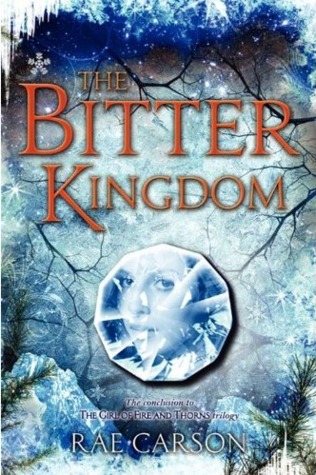
Review: The Bitter Kingdom by Rae Carson

The Bitter Kingdom is the conclusion to Rae Carson’s epic fantasy trilogy that started with The Girl of Fire and Thorns and continued with The Crown of Embers. As you might remember, I enjoyed the first book in the series, but it was the second one that made me a die-hard fan. From the twisting plot to the fully realized magical world unlike anything I’ve ever read, it is everything I want in a fantasy. And it didn’t hurt that it features Hector, one of my favorite fictional characters of all time. (Elisa, the main character, is no slouch herself).

So of course, The Bitter Kingdom was one of my most anticipated books of 2013. I couldn’t wait to hear how Elisa’s and Hector’s adventures would conclude, and if she would finally complete her act of service and fulfill her destiny as The Chosen One.

The Plot (from Goodreads):

The epic conclusion to Rae Carson’s Fire and Thorns trilogy. The seventeen-year-old sorcerer-queen will travel into the unknown realm of the enemy to win back her true love, save her country, and uncover the final secrets of her destiny.

Elisa is a fugitive in her own country. Her enemies have stolen the man she loves in order to lure her to the gate of darkness. As she and her daring companions take one last quest into unknown enemy territory to save Hector, Elisa will face hardships she’s never imagined. And she will discover secrets about herself and her world that could change the course of history. She must rise up as champion-a champion to those who have hated her most.

My Thoughts:

The Bitter Kingdom begins with one of my favorite epic fantasy conventions: The Long Journey Into Unknown Lands. In this case, Queen Elisa and her small band of allies are traveling to the hostile territory of Invierne to rescue Hector, the Captain of the Royal Guard, and also the man who holds Elisa’s heart, who was taken captive at the end of The Crown of Embers. Before they can get to Hector, Elisa and her companions must overcome both the harsh winter weather of Invierne and the mysterious, deadly magic wielded by the Inviernos. But in The Bitter Kingdom, we are treated to something we never got in the first two books: Hector’s point of view. So we are able to watch as he undermines and sabotages his captors, trying to delay their plans until Elisa comes for him.

I loved how Rae Carson turned the damsel in distress trope on its head by having Elisa be the one to go after Hector. Not only was it fun to watch the queen rescue the soldier, but it evidenced Elisa’s tremendous growth since the first book. She was no longer cautious and filled with self-doubt, but finally comfortable in asserting her power as Queen. But although Hector was tied up and weakened, he was not helpless either. It was fantastic to see the two of them work together to secure Hector’s freedom, even though neither of them knew what the other was doing. And as expected, I still loved Hector and Elisa. Adding Hector’s point of view was brilliant, and it was amazing to witness his cold strategizing coupled with his tender thoughts toward Elisa.

As far as Elisa goes, in The Bitter Kingdom we see her both at her most powerful and her most vulnerable. Just when I thought her character arc may be complete, going from a meek princess with a low self-esteem to a confident queen in control of inconceivable magic, she plummeted back down and had to claw her way up again. I thought it was a stroke of genius, because it not only kept the stakes high and her character vulnerable, but it really let us see how Elisa has grown as a person, even apart from the Godstone.

I also enjoyed the secondary characters. The cast is smaller in this book, and I missed spending time with some of my favorite characters from Crown of Embers (the most noteable being Tristán), but almost every character makes at least a cameo appearance in the second half of the book, where we get some insight into where they wind up. Meanwhile, a couple lovely new characters are added to the cast, and some familiar characters are developed further. My favorite was probably Storm, the Invierno-turned-Joyan that we meet in the second book. He evolves from someone truly unlikable when we first meet him to one of the most fascinating characters in the series. I could read an entire book (or series) just about him and his family and his conflicted loyalties.

After the Epic Journey concludes, it’s up to Elisa to stop a war, unite her people, get to the bottom of the magic the Inviernos are using to conquer anyone in their path, and discover her purpose as bearer of the Godstone. It’s a tall order, and Rae Carson handles it brilliantly, with lots of action and intrigue interspersed with Elisa’s own personal reflection as she struggles to be the person God needs her to be. By the end of the book, I had all of my big questions answered and felt satisfied with where the others were left.

The Bitter Kingdom was everything I want in the conclusion to a trilogy: action, intrigue, smart plotting, fantastic character development, and a satisfying conclusion. I’d wholeheartedly recommend this series to fans of fantasy and adventure, or just someone looking for a masterfully crafted, well-told tale.