Review: Before I Fall by Lauren Oliver (@oliverbooks @harperteen)

Lauren Oliver is quickly climbing my list of “authors I trust.” She may not have many books under her belt yet (she is also the author of Delirium and Pandemonium – read my review of the latter here), but I love what I’ve read so far. She has an amazing talent for writing characters in such a way that I feel like I know them and understand them – even if I don’t agree with them. She tackles subject matter I wouldn’t normally be interested in, and makes me care.

Such is the case in her debut novel, Before I Fall.

The Plot

The story follows Sam, your typical popular, Plastics-esque high school villain. She has it all: good looks, charmed life, macho boyfriend, beautiful friends.

That is, until the night she dies in a fiery wreck.

Imagine her surprise when she wakes up the following day…only to find out it’s not the following day. It’s the same day. Again.

What follows is a week of Sam reliving (and sometimes re-dying) that same fateful Friday over and over again.

She goes through it the way I imagine most of us would. First she denies what is happening to her. Tries to pretend it was all a dream or a hallucination. But it quickly becomes clear that what she’s going through is very real. And once she figures that out, she struggles with how to move forward.

Should she approach each day with a carefree, “eat, drink, and be merry, for tomorrow I’ll be dead” attitude? Should she try to right her past wrongs? Should she attempt to change the future?

As Sam goes through each day, her eyes are slowly opened to the realities of her life and the lives around her, and the truth behind her death.

My Thoughts

I’ll get it out of the way early: Before I Fall is Mean Girls meets Groundhog Day. Sam’s story is equal parts Cady Heron (post-Plastification) and Phil Connors (although she probably resembles Lindsay Lohan a bit more than Bill Murray).

But you know what? I love Mean Girls and Groundhog Day. And I loved Before I Fall. So who cares? A good story is a good story.

So, that said, what’s the fun in reading a book about a Mean Girl that lives the same horrible day over and over, and dies after most of them?

As I said before: Lauren Oliver has an amazing talent.

I’m guessing that unless you really are Regina George, you will hate Sam at the start of the novel. She’s shallow, she’s rude, she’s selfish, and she’s mean. She justifies all her actions to herself, but she’s not in any way likable. I spent most of the first few chapters wanting to shake some sense into her vapid, empty head.

However, the more I read, the more invested I was in Sam and her journey. She grew. She transformed. Sometimes I wished she would snap out of her Plastics mentality faster, but Ms. Oliver wrote her arc very naturally and organically. And even when I didn’t agree with her decisionsI understood them.

Yes, there were parts where it dragged slightly (the fact that those parts are few and far between is still a monumental achievement in a book that recounts the same day seven times). And while I found myself ultimately liking Sam and cheering her on, there were a few other characters that made me gag every time they entered the scene (Sam’s BFF, Lindsay, and hunky boyfriend, Rob, are two prime examples). I understand their necessity to the story, but man, were they ever annoying.

The biggest problem I had with the book was that even after Sam realizes the error of her ways, she never calls out her friends (especially Lindsay) on their incessant bullying of…well, just about everyone. On the one hand, I can see how Sam is still intimidated by Lindsay and afraid of upsetting her. On the other…I kind of just wanted her to grow a spine.

However, those annoyances were completely overshadowed by my investment in Sam’s story; my complete adoration of the character of Kent, the sensitive, socially awkward boy who’s had a crush on Sam ever since elementary school; and my fascination with the character of Juliet, a reclusive girl who Sam, Lindsay & Co. have been tormenting for years.

Before I Fall ended before I was ready, but it ended where it needed to end. The story was resolved the way it should be (and no, I’m not going to tell you if she lives or dies. You’ll have to find that out for yourself).

I found myself thinking about Sam and her story long after I put the book down. Her story is haunting, sweet, heartbreaking, and inspiring. I loved it.

Content Guide: Contains some violence, teenage drinking and drug use, bullying, minor sexual content and language.

Review: The Twilight Saga, by Stephenie Meyer

Based on a vast amount of research (which consists mainly of mentally cataloging the Facebook and Twitter updates of my friends), I’ve determined that there is a definite line in the sand when it comes to readers (especially readers of YA and fantasy books):

“Do you like Twilight?”

Those on one side of the line view those on the other with disdain and derision. The other side of the line is jaded, cynical, pretentious, snobby.

Or the other side is immature, pedestrian, unsophisticated, Philistine.

I promise this is not a cop-out, but I fall pretty solidly on the line. I kind of love Twilight while kind of hating it. And here’s why.

What is Twilight?

For those of you who have been living under a rock, Twilight is an enormously popular YA series by Stephenie Meyer. There are four books in the series: Twilight, New Moon, Eclipse, and Breaking Dawn.

It has also spawned an even more enormously successful move franchise starring KPattz (yes, I did just refer to them as KPattz. Whatcha gonna do about it?).

I’m going to talk about the series as a whole, because I highly doubt I’ll ever feel motivated to review each book on its own. Besides, odds are if you’re going to read one, you’re going to read them all. Obviously, spoilers ahead.

Here’s the Cliff’s Notes summary of Twilight: It is the story of a teenage girl named Bella Swan. Bella meets a mysterious boy at school named Edward Cullen. Edward acts really weird around Bella — kind of like he can’t stand to be anywhere near her — which turns out to be because he is a vampire, she smells unspeakably delicious, and therefore he can’t stand to be anywhere near her.

Before too long, she gets him to spill the beans about his vampire-ness, and they fall in love despite her mouth-watering aroma.

Bella also gets chummy with Edward’s vampire “family,” some of whom have special powers.

Oh, and Edward is also telepathic.

Edward and Bella have a tumultuous courtship, made even more complicated by the fact that Bella’s good friend Jacob is also in love with Bella.

Oh, and Jacob is a werewolf. Werewolves hate vampires. And vice versa.

[Aside: Although Twilight has an irrefutable love triangle, am I the only one who never understood the Team Edward, Team Jacob nonsense? Wasn’t it 100% obvious and inevitable that Bella never even remotely considered choosing Jacob over Edward? Didn’t New Moon make that abundantly clear?]

Assorted and increasingly threatening scenarios play out as Edward and Jacob battle (mostly figuratively, sometimes literally) for Bella’s heart. Friendships are tested. Villains rise and fall.

It’s all very exciting, and they all live [er…more or less] happily ever after.

Why I Love Twilight

I’ll admit it. Twilight is a highly addictive series. I devoured all four books in as many days. I was completely swept up in it. I keep trying to put my finger on exactly what swept me up, and here’s the best way I can explain it.

Twilight is kind of like a Twinkie. On the one hand, there’s not a lot of substance to it, there’s no real benefits to consuming it, you really shouldn’t think too hard about what’s in it, and most people are kind of embarrassed to admit they like it. And yet, it’s inexplicably delicious. And after consuming one, you kind of feel like the damage has been done, so you may as well go ahead and have another.

I really enjoyed Twilight, and I have a hard time explaining why. It is inexplicably delicious. It keeps me coming back for more. And there is something in me — the intangible, subconscious, reflexive part — that can’t be shaken from this stance, no matter what the logical, intellectual part of me thinks. Which brings me to…..

Why I Hate Twilight

First of all, none of the main characters in Twilight are all that sympathetic. Bella is the worst — she’s co-dependent, self-destructive, whiny, self-loathing, clingy, selfish, and irresponsible. Considering that the books are all written from her perspective (with the brief exception of a few chapters in Breaking Dawn), this can be more than a little frustrating.

Edward and Jacob are slightly more tolerable, but I honestly couldn’t figure out what exactly Bella saw in Edward (other than his breathtaking beauty – more on that later). He seemed kind of stiff and dull, not to mention overbearing. And Jacob, while definitely more fun, still had moments where he was a weird blend of macho and emo, neither of which are qualities I find all that attractive.

All the supporting characters – the Cullens, Bella’s friends at school, Bella’s father – are much more likable. Or at least more entertaining.

Secondly, the writing is abysmal. I’m speaking solely in a technical sense right now, as obviously there’s something about the writing that is also amazing, since it’s kept millions of people riveted through four long-ish books. But technically, it’s appalling. The most glaring fault is Ms. Meyer’s tendency to use the same descriptors over…and over….and over.

I found myself physically throttling the book every time I read (again) that Edward’s skin “sparkled like diamonds.”

Speaking of which, Bella’s constant need to describe every facet of Edward’s gorgeousness got really old, really fast. We get it. He’s pretty. He’s super-pretty. Now let’s move on please. Surely there’s another reason you’re hopelessly in love with him beyond the fact that he’s pretty. Yes? No?

Lastly (and I realize this is probably not a turn-off for most of the reading audience), Twilight vampires are just too…nice. They don’t burst into flame in the sun — nope, they just get even prettier with their sparkly skin. They can even stroll around outside, perfectly unharmed and unsparkly, on a cloudy day! (Although I have to say, I think sparkly vampires are marginally better than vampires who avoid bursting into flame by wearing copious amounts of sunblock).

Once you let vampires go play in the sunlight, it kind of ruins a lot of what makes them spooky. They don’t have to hide out in underground crypts. No, they can live in fabulous mountaintop mansions. They can hold jobs, go to school, fall in love, get married. They don’t have to hunt at night. They might do it anyway because it is easier, but it’s not imperative.

And unless you think colored contacts are frightening, they don’t even look scary. Nope. They look like this [Disclaimer: I realize I’m referring to the film and not the actual book. But this is pretty much how they’re described in the actual book, so I think it’s valid]:

She’s one of the scariest ones!

Which is not as scary as this:

or this:

Ah, Spike. You’ll always be my favorite.

or even this:

Their posh-ness and refinement made them creepy. Plus, their activities and amusements were WAY more freaky than even the baddest baddies in Twilight.

The Verdict

I honestly don’t know if I can recommend Twilight to you. Can you overlook some writing faux pas, a good amount of cheese, and an infuriating main character, as long as the story’s entertaining? Are you a hopeless romantic? Do you like your monsters a little soft around the edges? Then you’d probably like (or even love) Twilight. [Full disclosure: If I had to answer the above questions about myself, my answers would be maybe, mostly, and no. And I still liked it.]

Do you consider yourself a literature snob? Does it frustrate you beyond words when an author uses the same adjective to describe the same thing multiple times? Do you tend to turn your nose up at things that would appeal to 14-year-old girls across the globe? Then Twilight is most likely not for you.

I apologize that I just wrote a fairly long review, only to come down on the side of “I can’t pick a side.” But that’s pretty much where I stand. Some days, I love Twilight. It makes me happy and giddy inside. Other days, I hate it. It drives me nuts. It makes me want to throw things (and mail Stephenie Meyer a thesaurus). But overall, I think I love it more than I hate it.

Ms. Meyer may not be a great writer (at least not in her first venture), but she is a great storyteller. She got me to care about characters I didn’t even like. She kept my attention through an entire book dedicated to moping. And she even managed to make me not too upset when I was promised an epic battle and was instead given an epic staring contest. I honestly can’t think of another author who got me so heavily invested in her storytelling that I could overlook all my (many) problems with the writing, the characters, and the essence of the story itself.

It’s kind of perplexing.

Content guide: contains some violence, mild sexual content, some dark themes concerning suicide and mortality, and some vampires who actually DO kill people.

Review: The Name of the Wind, by Patrick Rothfuss

When I picked up The Name of the Wind, I knew 3 things about it:

1. It is an “epic fantasy.”

2. The protagonist is an innkeeper.

3. It’s supposed to be awesome (this guy calls the book “arguably the best fantasy fiction [he’s] ever read” and refers to Rothfuss as “the next coming of J.R.R. Tolkien”).

Now, there’s something you need to know about me and things that are supposed to be awesome: I tend to not think they’re awesome. I’ll spare you specific examples [*cough*Gone With the Wind*cough] so that you don’t freak out and decide to hate me forever. I just tend to like what I like, and what I like often doesn’t line up with what the world at large likes.

Plus, the more something is hyped, the more disappointed I tend to be when it’s not all I imagined it would be. You’d think I’d learn my lesson and stop expecting greatness every time greatness is forecast, but no. I’m incorrigible that way.

So I went into The Name of the Wind in a divided state. On the one hand, I was really excited to read a spectacularly awesome fantasy book. On the other, I was bracing myself for disappointment when I inevitably disagreed with the populace at large.

And after finishing TNOTW, I have to say…I’m still divided.

THE PLOT

TNOTW revolves around Kote, keeper of a modest inn in a small town. As the story opens, the townsfolk are all in a tizzy over some strange happenings: namely, giant spider-demons attacking travelers on the road. They come into the inn, troubled and flummoxed, and discuss the horrors of the world outside.

Then, unbeknownst to the townsfolk, Kote and his assistant, Bast, have a Very Mysterious Discussion where we come to realize that Kote knows something about the spider-demons, and that for some reason (beyond the obvious fact that they are giant spider-demons), they are Very Bad.

Then he goes out to kill a bunch of them. But before he can, he stumbles into a traveling scribe. Or rather, the scribe — Chronicler — stumbles into him. Chronicler was riding down the road, minding his own business, when he was robbed by highwaymen and forced to set out on foot. Lucky for him, he wandered straight into where Kote had set up spider-killing camp, and arrived just in time for the party.

After witnessing Kote single-handedly dispatch a bunch of spider-demons, and subsequently passing out, Chronicler is brought to the inn, where the truth quickly comes out: Kote is really Kvothe (pronounced “quothe,” and thus screwing with my internal narrator every single time I read his name), the legendary — and presumably dead — hero. Chronicler immediately presses Kvothe for information, since he’s pretty much the most famous guy ever. And Kvothe grudgingly agrees to tell him the story of his life. It will take 3 days.

[Side note: It took me for-e-ver to realize that the book’s subtitle, “The Kingkiller Chronicle: Day 1,” refers to the first day of storytelling. Duh.]

Thus begins the story of Kvothe’s childhood, where he was raised by loving parents in a troupe of traveling performers…until they were brutally murdered by the Chandrain, terrifying beings that, up until that point, Kvothe (and everybody else in the world) presumed didn’t exist.

Young Kvothe mourns his parents and friends, while struggling to survive, for several years before he sets off determined to complete his education at the University, which is a lot like Hogwarts: The College Years. The students learn about magic in a variety of forms, although they don’t call it magic. “Magic” is a term for ignorant country bumpkins. University students pursue sympathy, artificery, alchemy, and other fancy words that really just mean magic.

Kvothe is 15 when he enters the University, several years younger than his youngest classmates, but his prodigious intelligence, coupled with his sharp wit and abundant charisma, help him quickly advance through the ranks. He makes a few close friends and more than a few enemies. Oh, and there’s a girl. Of course.

MY THOUGHTS:

I learned something about myself while reading this book. I realized that I am a big fan of the 3-act narrative.

Act 1: Characters are introduced. Background is given. World is built.

Act 2: Things go well. Hint of conflict. Or maybe even lots of conflict. You get a good feeling for who the good guys and bad guys are, and where the story is headed.

Act 3: Big finish. Possibly a battle. Major conflict is resolved in a thrilling way. Possible set-up for future conflict if it isn’t a stand-alone novel.

Part of the reason I’m so divided about TNOTW is that it doesn’t follow this formula. At all. Really, the whole book seems like a big Act 1. Maybe a bit of Act 2. Definitely no Act 3. I didn’t realize that I was hungering for an Act 3 until I finished the book and never got one. I was so sure it would be there, even when I noticed I was down to the last 50 pages and no noticeable conflict was being set up, that I was actually shocked when it never happened.

But then again, this book never promised me that it would be set up in 3 acts. As a matter of fact, it told me very clearly what to expect when Kvothe began his tale: a story of a man’s life that would be told in 3 days. And this was Day 1. The fact that I didn’t really pick up on this — or was expecting the story of his life to fall neatly into three days of 3-act narratives — is my fault.

So I need to judge this book on what it is, and not what I expected it to be.

The Pros:

Mr. Rothfuss is a wonderful storyteller. He gives enough detail to draw a reader into the world, but not so much that I got bored or that my attention wandered. He was able to draw from me every emotional response that the story required: happiness, contentment, sadness, fear, desperation, determination, anger, triumph.

Probably one of my favorite scenes in the whole book was Kvothe’s first time performing at the Eolian. As a musician and former performer, I could vividly empathize with all the emotions he was feeling, and I actually felt my heart racing when he took the stage. It was a magnificent scene, even though (as far as I can tell) it had nothing to do with Kvothe eventually becoming a hero. Being able to draw me so far into scenes like that — scenes with little adventure or intrigue, but full of emotion — was one of the book’s great strengths.

The magical world he created was also extremely well-developed. The laws of sympathy are well-defined and loosely rooted in science, which makes it almost hard to believe that this stuff couldn’t work in real life. All the divisions of sympathy work together in an orderly and understandable way. And Mr. Rothfuss never bends or breaks the laws of sympathy, even when it could possibly make for some cool action scenes.

Kvothe’s time at the University is in turns exciting, frustrating, illuminating, and captivating. And always interesting.

The Cons:

First off, many of the main characters have more than one name (maybe this is meant to underscore the heavy emphasis placed on Naming in the story). Kvothe, Bast, Chronicler, Denna…all go by multiple names during the course of the story. It’s not really confusing, but I’m also not sure it’s entirely necessary. Kvothe/Kote’s name change is understandable. I don’t know if the rest really are.

Secondly, Kvothe is kind of irritating. I didn’t dislike him, but I didn’t love him either. He’s just too good at everything. He’s ridiculously handsome. He has a voice like an angel. He can play the lute like he’s some sort of superhuman with 15 fingers. He’s apparently memorized every minute fact to have ever tripped across his consciousness. He excels at every form of sympathy that he tries. He can spin a yarn, work a crowd, woo the ladies, and outmaneuver the wiliest of weasels.

Eventually, you just kind of want a protagonist to have some weaknesses, ya know? And no, “I’m misunderstood by the jealous and petty professor/student because they’re envious of my awesomeness” is not weakness.

Lastly, I felt at times the story lacked direction. It opens with the Very Mysterious and Terrifying spider-demons, then never mentions them again until the very end of the book, and then only kind of. It sets up Kvothe to be the greatest and most famous hero the world has ever known, but doesn’t even begin to tell us why. He spends the entire book trying to find information about the Chandrain, and ends with barely more than he started with.

I understand that most of this is probably because this is the first book in a trilogy, but I’m of the opinion that if you can’t resolve any of the story lines in the first book, then you should just write one long book. Overarching plots and conflicts are great. I am a fan of the multi-book series. But let’s resolve something in book 1. Let’s not just write trilogies for trilogies’ sake. I know trilogies are all the rage right now, but come on. Let’s have a purpose.

A friend described the middle of the book as “meandering,” and I’d have to agree. It meanders. It’s an interesting meander. I never was bored, or annoyed. But I couldn’t figure out what the point of all these little vignettes was. It just kind of moseyed around, taking its sweet time, with no clear destination in mind.

What’s more, since the story never really felt like it was going anywhere or driving toward anything, I never really had that sense of urgency to keep my turning pages. I could put the book down in the middle of a chapter and not feel that pull — you know, the one. It’s the one you feel when you’re doing dishes or folding the laundry, and all of a sudden you’re not doing those things anymore because you’re reading. You didn’t decide, necessarily, to stop being productive and start reading. You just were reading, because the book pulled you back. Because there was something in the story that hadn’t resolved, and you needed to know how it resolved.

Anyway. I never felt the pull. I would enjoy the book while I was reading, put it down when I needed to, and pick it up later when I remembered I was in the middle of a book. It was a weird feeling to be able to completely walk away from a book I was actually enjoying, and not feel the pull. It’s never happened to me before.

THE VERDICT:

So I’m torn. It wasn’t what I expected. Not a lot happened. I still don’t see why this guy is legendary, and I’m kind of annoyed that he’s good at everything.

Was it enjoyable? Yes, for the most part. Frustrating when I realized I was basically just reading one big setup for book 2 (or maybe even book 3), and wasn’t going to get any payoff in this book. But barring that, it was enjoyable.

Was it well-written? Did everything in the book make sense, according to the rules of the world Kvothe was living in? Absolutely. Zero complaints there.

Do I recommend it? Right now I’m going to say yes. I haven’t finished book 2 (The Wise Man’s Fear) yet, and book 3 (The Doors of Stone) hasn’t even been released. I have a feeling this is one of those trilogies where once I finish the whole thing, it’s going to drastically impact my opinion of the first book. But for now, I’m going to say yes. It has great potential to be a fantastic story.

I just hope something actually happens in the next book.

Content guide: Contains violence and peril.
Review: Uglies, by Scott Westerfeld (@ScottWesterfeld @SimonTEEN)

Uglies is yet another one of those series I started without any idea of the plot (I have got to stop doing that. It’s really going to backfire on me someday). All I knew was that it’s yet another YA dystopian. I know, I know, the genre is flooded with mediocrity right now, but before you immediately tune out, let me just throw this out there: this one is actually good.

PLOT:

Uglies follows Tally Youngblood, a 15-year-old girl living in a futuristic society that has decided that the main thing wrong with the world is that attractive people have unfair advantages over the unattractive. The solution? Everyone undergoes cosmetic surgery on their 16th birthday, modifying all their facial and physical features to fit a common standard of perfect beauty.

Once the procedure is complete, these former “Uglies” are now allowed to live in beautiful cities with the “Pretties,” where their every need is catered to via a hole in the wall (think replicators on Star Trek: TNG), and their only concern is what to wear to the next fabulous party.

Tally is eagerly awaiting her operation, passing her time with harmless pranks on the Pretties, until she meets Shay. Shay is also 15, and therefore also an Ugly. As a matter of fact, she and Tally share the same birthday, which means they will have their procedures at the same time.

The difference is that Shay doesn’t want the procedure. And after unsuccessfully trying to convince Tally to run away with her, Shay disappears. All she leaves behind is a set of cryptic instructions, in case Tally wants to join her.

While Tally is concerned for Shay, she doesn’t fluctuate in her desire to become a Pretty. She hopes Shay got what she wanted. But soon, Tally will get what she wants too.

However, on the day of Tally’s procedure, she is presented with an awful choice: go find Shay, and the rebels she has run away with, or stay Ugly forever.

Thus begins Tally’s journey to the Smoke, the secret rebel hideout that Shay has fled to. All Tally wants is to put this all behind her and become Pretty. Until she finds the Smoke, and starts to question everything she ever believed.

MY THOUGHTS:

I’ll admit, I was a little wary about starting a series that revolves around being pretty. I mean seriously, how much more superficial can you get? I was prepared to be super-annoyed with the shallowness of it all.

But once I started reading, I found myself completely absorbed in Tally’s world. Mr. Westerfeld actually made me understand how Tally would want nothing more in life than to become Pretty, and managed to do it without making me hate her. No small task.

There were a few things I could nitpick about the plot. The endless hoverboarding, for example (I couldn’t help but think that Mr. Westerfeld may have just wanted an excuse to stretch this scene out for an entire book…or four).

Also, I had a little bit of a hard time figuring out how anything actually got accomplished in this world. What I surmised was that the inhabitants of Uglyville go to school, then turn 16 and party hearty for a few years until they hit “Middle Pretty” age and actually start contributing something to society. Not that I could imagine any of them actually wanting to contribute, since it sounds like the Pretty lifestyle was the epitome of luxury and indulgence. Maybe you or I would get tired of living like that, but the Pretties don’t seem to mind in the least.

Is a workforce consisting entirely of middle-aged ex-partiers (as it’s implied that the elderly, or “Crumblies” — ouch — also do not work) enough to keep this advanced society running smoothly? Maybe not in the world you and I live in. In the world of Uglies, though, it works.

When it comes to YA fiction — or any fiction, for that matter — I can almost always poke holes in the logic of its world. The question I have to ask myself is, “Did I care?” If the answer is yes, it pulls me out of the story and diminishes my enjoyment of the book.

With Uglies, the answer was no. I didn’t care that not everything made sense. What I cared about was Tally. Was she a perfect character? Heck no. She drove me nuts at times (this is also one of the main downfalls of reading YA lit, period. The protagonists are always teenagers. I am not). But she was fun to read about, her journey was exciting, and I couldn’t put the book down until I knew what happened to her.

Content guide: contains some mild violence.

Uglies has three sequels: Pretties, Specials, and Extras. I recommend the whole series.

Book to Film: The Hunger Games

A lot of the books I read eventually become movies. Sometimes I read the book first, sometimes I see the movie first. Sometimes I see the movie because I read the book, and vice versa. So I thought it may be fun to talk about the film adaptations of the books I’ve read.

And what better film to kick it off than the one currently dominating the box office, The Hunger Games?

If you want to brush up on the basic plot, you can read my review. But if you haven’t read the book or seen the movie, you probably don’t want to keep going. Because I’m about to get into spoiler territory, which means you’re about to get either lost or annoyed.

CAST

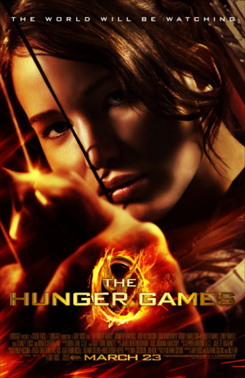
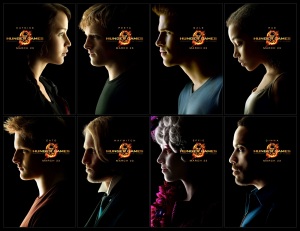
For the most part, I thought the casting was spot-on. Jennifer Lawrence was a perfect Katniss, Josh Hutcherson was a charming and empathetic Peeta, Amandla Stenberg broke my heart as Rue, Lenny Kravitz was a cool and composed Cinna.

It probably helps that I read the books after the movie had been principally cast, so even though I wasn’t very familiar with a lot of the actors portraying the leads, I at least had their images in my mind when reading. And because I was aware of who was cast when I was reading, I can honestly say that for the most part, the casting, makeup, and wardrobe department did an excellent job of making the actors look the way Suzanne Collins describes the characters.

There were only a few characters where the casting surprised me. None of the actors were bad (Wes Bentley in particular was pretty impressive) — just not what I pictured from reading the book. These included:

Toby Jones as Claudius Templesmith. (Couldn’t find a picture of him in character – sorry). I pictured someone boisterous and imposing, to go with his big, booming voice. I’m not actually sure if he’s given a physical description in the book. I just pictured him having a very dominating physical presence. But they reduced Claudius’ character to a very minor one in the film (I think mostly to bolster the role of Seneca Crane, which is a creative decision I agree with), and Toby Jones did a fine job with what he was given.


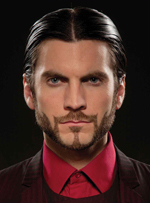
Wes Bentley as Seneca Crane. You have to understand, Seneca Crane is barely even a character in the first book. He’s not even given a name until the second book, and he has very little written about him. I’m nearly positive there is no physical description given. So for some reason, I pictured him as middle-aged and portly. No idea why. However, probably to give the events of the second book/film more weight, the filmmakers expanded the role of Seneca Crane in the film, and Wes Bentley was excellent in the role. He had very few lines, but conveyed quite a bit with his eyes and expressions.

Isabelle Fuhrman as Clove. This is the only bit of casting that I’m positive went completely against the physical description given in the book. In the book, Clove has an imposing physical presence, and is much bigger than Katniss. There’s a scene in the book where Katniss climbs a tree, and Clove can’t follow her because she’s so much larger than Katniss. Isabelle is noticeably smaller than Jennifer Lawrence. That said, Isabelle Fuhrman had every bit of the character’s personality spot on, and delivered all her lines and actions exactly how I imagined Clove would. She just didn’t look like her. But I’m not a stickler for actors having to exactly match physical descriptions in books. I’d much rather they act like the characters than look like them. So I was totally fine with this change.

PLOT

As far as book-to-movie adaptations go, The Hunger Games was one of the most faithful ones I’ve ever seen. All the main plot points were there. There were some omissions and alterations from the book, obviously. It’s necessary when condensing an almost-400-page book down to a 2.5 hour movie.

Some of the changes didn’t bother me – the elimination of the characters of Madge and the Avox girl; the shortening of the Games themselves; the addition of the scenes with President Snow, Seneca Crane, and the Gamemakers; the lack of mention of the eyes of the mutts at the end; the fact that Peeta (it would seem) doesn’t have his leg amputated after the conclusion of the Games. I thought those changes helped make the story watchable and understandable, especially for people who hadn’t read the books.

Others irked me just a tad. [Major spoilers ahead. Don’t say I didn’t warn you. Twice.]

There’s a scene in the book where the Career tributes leave a girl for dead in the woods, but a cannon (signaling her death) never sounds. Peeta volunteers to go check and finish her off. He’s gone an unusually long time. Finally, he returns and then the cannon sounds. The Careers (and Katniss, who is observing it all from her hiding place) all assume Peeta killed her. But this is also when they’re all assuming that Peeta is helping them hunt down Katniss, when in fact, he’s trying to protect her.

I’ve always been curious what actually happened between Peeta and that girl. It doesn’t seem to be in his character to go and kill a wounded girl. Did he simply wait with her until she died? Did he try to help her? It’s never explained in the books. Since Suzanne Collins collaborated on the screenplay, I was hoping it would be addressed in the movie. But the whole scene is omitted.

The other scene that was left out of the movie that really irked me was the exchange between Katniss and Peeta at the very end of the book. That conversation is the catalyst for some major developments between them in Catching Fire. It changes their entire relationship. And they left it out of the movie.

There is conversation, and the gist of the original conversation is kind of maybe implied. But in the book, they both state their feelings quite bluntly, and in the movie, it’s all subtlety. I wish it had been blunt.

Other than those two notable exceptions, I thought the adaptation was extremely well done. It was obvious that Gary Ross, the actors, and the crew were trying their best to respect the books and their message.

FILMING

I’ll be honest – there was a lot of shaky cam. It kind of irked me at first.

But.

The more I thought about it, the more I felt that it was adding to the sense of unease, of wrongness, of the feeling that this world was not good, pretty, or comfortable. And that’s exactly how it’s supposed to feel.

It didn’t feel like a big, glossy action movie where the bad guys blow things up and the attractive hero always escapes by the skin of her teeth. It felt gritty and dirty and upsetting.

Speaking of dirt, I know there are some nay-sayers out there that think it wasn’t gritty and dirty and upsetting enough. But just because people are poor and in a desperate situation doesn’t automatically turn them into cavemen. They can still practice basic hygiene and grooming habits. They can still clean their small, ill-equipped houses. So I was totally okay with the overall look of the movie.

The violence was a big concern for a lot of movie-goers. After all, it’s kids killing kids. How on earth would anyone want to watch that? But much like in the book, where Katniss is observing the violence in bits and pieces as she focuses on trying to keep herself alive, a lot of the violence takes place in quick snippets or off-camera. It’s not downplayed. You definitely feel that these events are not right. But it’s also not gratuitous. It’s not glorifying violence. I thought it was handled well.

FINAL IMPRESSIONS

If I had to pick one, I’d still say I enjoyed the book more than the film. But this is definitely one of my favorite book-to-film adaptations, especially in the Young Adult genre. I thought the story came across loud and clear. The sets, costumes, and makeup were perfect. The acting was fantastic. If I had my druthers, it would have been about 30 minutes longer, but I know that a 3-hour film based on a book directed at teenagers is just not something studios are interested in doing. All in all, it was great to see a book I love brought to life so faithfully in the theater.

Grade: A

The Hunger Games is rated PG-13 for intense violent thematic material and disturbing images – all involving teens.