Interview: Liz Long, author of Gifted (@LizCLong)

You guys, I’m pretty excited about this. It’s a momentous occasion. My first author interview! As you’ll (maybe) recall, I recently reviewed debut author Liz Long‘s book, Gifted. It’s a unique and exciting story about a circus full of people with superpowers, and I was itching to pick her brain when I finished.

She was kind enough to provide answers to my extensive questions, and I think you’ll enjoy her answers!

Where did you get the idea for Gifted?

I’ve always had a weird obsession with fire (I’m not an arsonist, I swear). I’m an Aries/Fire sign and while I certainly read and love supernatural stories, I wanted to write something that didn’t have vampires or witches. That’s not to say, however, that they don’t exist in the Gifted world, by the way…

How long did it take you to write Gifted? What was the writing process like?

Technically, I started sketching the outlines when I lived in Nashville, so start to
finish it was about three years. But I sometimes let life and junk get in the way, so
I’d probably round it down to a year and a half if I cut out the lazy times.

The process was sort of strange, really. I’m a pantser writer, which means I
write whatever comes to mind whenever it hits me. I don’t write scenes in order,
which typically results in a copy/paste chaos, then I go back and connect the dots.
(I’ve anticipated this from now on by purchasing, using, and falling in love with
Scrivener. So. Much. Easier.)

You chose to go with indie publishing. I know you go into your reasons in detail on your blog, but can you give me a nutshell version about why indie publishing was right for you?

Oh gosh, I kinda love this question. I wrote a blog article about this, actually, but
honestly, I’m sort of an impatient soul. It wasn’t about rushing to put my MS out
there, but I believe in it so much and feared it sitting out there in limbo forever.
With full control over everything (editing, cover art, marketing, etc.) I really like
knowing that I’m the driving force—I’m not afraid of a little hard work. Plus
the indie community is just phenomenal, I can’t say enough nice things about
everyone!

I loved the circus setting in Gifted. What kind of research did you do to make the
Donovan Circus come to life?

There’s an incredibly interesting PBS 6 hour documentary series called “Circus” that follows the Big Apple Circus around for a season. It’s not only about the show itself, but behind the scenes with the employees and living circus life. I watched and re-watched every episode, taking note of the general circus feel and how they work (like the way they set up their living area is similar—obviously they don’t sit in a town for weeks at a time, but the grounds are laid out in a similar fashion). Since my characters all have powers, though, it’s obviously tweaked—workers may exist in both worlds, but mine have a little extra strength or my acrobats can literally fly so there’s never any risk of them hitting the ground.

I also saw the Ringling Bros. show when they came to visit my civic center
last year. Sort of a last minute fluke thing (I got tickets because I worked at a
magazine), but it was great to see costumes up close and get an idea of how they
ran the floor.

Then there was the research I did online for things like show terms. “First of
May” and “Jonah’s Luck” are real deal vocabulary, for example.

What’s next for Lucy and the Donovan Circus crew?

Well, Lucy still needs to figure out what the heck her father’s history is, which
essentially means she needs a family tree lesson. This is going to take her on an
interesting path on how she uses her own gift.

Then there’s the fact that Sheffield’s got so many enemies. Lucy’s got a huge
target on her back now thanks to her firepower. Lucy doesn’t quite understand
just how much her world clashes within itself. There are some pretty evil gifted
beings out there, let’s just put it that way.

Plus, it’s time to move to a new city. There’s definitely new stuff within each new
location.

Can you tell me a little bit about the YA series you’re working on?

Oh I’m so excited about this one! Currently titled “Super Nova” (not totally
set on that), it’s about a 17-year-old girl named Nova. They live in a fictional
city, Arcania, that’s being taken over by criminals. A supremely bad guy named
Fortune kills her little sister, sending Nova on a quest for justice (or revenge). The
catch? Nova’s got her own superpower. It actually is set in the gifted world, but
completely different characters and storyline. So the readers will recognize the
world and certain traits, but be taken on a totally new adventure.

What’s the most exciting thing about being a newly published author? The scariest thing?

The most exciting is definitely hearing so many nice things from everyone.
Because I’m new to it, I’m pretty much a nervous wreck, but hearing how much
people have enjoyed reading Gifted is just so nice to hear.

The scariest thing…gosh, there’s a few! Haha, um, I guess it’s the waiting game.

I can handle a poor review (I know not all books are for everyone—there are
people who didn’t like Harry Potter for crying out loud, so I know I’ll have a few
haters), but it’s literally just waiting for bloggers and others to read the book.
I don’t want to hover or annoy, so I’m kinda sitting and twiddling my thumbs
waiting to hear on a review. (Just kidding-I’m writing. But also a little twiddling.)

What have you learned during the writing and release of Gifted? How will it change the way you approach future books?

Less pantser approach, more plotter involved. I’ve done a much better sketch for
the next couple books and I’m trying to get it all well-established before writing
too much. I got in way over my head when I had so much going on in Gifted—I
had to remember that I could save a lot for another title. I’ve also learned a couple
lessons as far as the release. Actually publishing/printing will be easier because I
understand the formatting as well as making a cover and the order of how things
have to be done. Self-publishing is way harder than just uploading a document
and throwing it on Amazon.

What one piece of advice would you give an aspiring writer?

Don’t give up. You can get distracted, you can get lazy, but don’t give up. And
indie publishing is not as untraditional as it sounds anymore.

Gifted falls into a relatively new category of books: “New Adult.” What the heck is New Adult?

Oh I so hope this becomes a thing! New Adult is sort of the in-between for high
schoolers and adults, think 18-24 range. I love the idea, because as someone
who read older books as a teen, but at 27 might now roll their eyes at some of
the high school/teen stuff, that intermittent stage is a great balance of watching
someone figure out their journey but still manage to land themselves in some
adult situations.

And now for some frivolous and ridiculous questions:

Lucy compares herself to Pyro from X-Men. Who’s your favorite X-Men character?

Oh my gahhh. If I go by the gray I keep finding in my bangs, it’s Rogue. But
technically, I’d have to go with Jean Gray, aka Phoenix. She’s such a great
character and she’s incredibly powerful. Plus she’s willing to make sacrifices for
the greater good, which is always admirable.

Lucy also says Star Wars was her dad’s favorite movie. Who’s your favorite Star Wars character?

Han Solo. No question. He’s smart, he’s capable, he’s a lone wolf until suddenly
he realizes maybe he can do some good against the Empire. And if you wanna
argue or throw down, be my guest. I’ve poured water over my best friend’s head
and got into shouting matches with my husband.

If you were Gifted, what would you want your power to be?

Argh, there are so many! I’ve learned from Sookie Stackhouse I’d never want to
be a Telepath. No way would I want to be a Firestarter. I think I’d want Bianca’s
Transporter gift most—the ability to be anywhere you want in an instant is pretty
appealing!

In Gifted, Lucy’s decision could really go either way, but are you Team Gabriel or Team Keegan?

I love them both for different reasons. I’m afraid I don’t want to say because I
don’t want it to reflect back to Lucy’s choices. Sorry!

Chocolate or vanilla?

Always chocolate

Tea or coffee?

Diet Coke

Star Wars or Star Trek?

Wars, but I’ll watch Chris Pine as Kirk all the live long day.

Batman or Superman?

Batman’s far cooler. He’s got gadgets and is actually human enough to get his
butt kicked and make us fear for him. (Dark Knight Rises, anyone?)

Gale or Peeta?

If it’s the books, Peeta all the way. If I’m looking at that cute Hemsworth kid
from the movie, Gale.

Favorite book?

Harry Potter series. I’m in sheer amazement at the smallest details she included
from start to finish. She’s just a genius. I can talk about it for hours, as a reader or
as a writer!

Favorite movie?

Again with the toughies! Geez…I love so, so many movies. I’m a huge fan
of Indiana Jones (really anything with Harrison Ford as I have an unhealthy
obsession). I also love all the geek movies—Iron Man, Star Trek…I need to stop
before I rattle off 20 titles. Though I suppose now I’ll say: The Avengers!

Favorite TV show?

It’s a toss up! I watch too much TV for someone who wants to write novels. 30
Rock is my go to (everyone calls me Lemon or LL), but I also adore Parks & Rec,
Modern Family, and Grimm. Oh and Game of Thrones (it makes me want to write
a ridiculously epic battle scene every time I sit at my computer). I can’t pick just
one.

Favorite food?

I’ll go with pizza, since I tend to eat that about four times a week. Just kidding.
Sort of.

And finally, since you wrote a book about characters with superpowers and that makes you an expert, give us your review of The Avengers movie in 10 words or less.

Visually stunning, chill-inducing, cheer-worthy, perfect superhero flick. (I love
being an expert on stuff!)

Thanks so much, Liz, for agreeing to let me interview you! I enjoyed your answers, and look forward to reading about the future happenings in the Gifted world!

Review: Die for Me by Amy Plum (@harperteen)

Die for Me is the first novel in the Revenants trilogy by Amy Plum. I’m going to a book signing for Ms. Plum next week (WHEEE!) and really wanted to have read her book before meeting her in person. Unfortunately, it’s not looking like I’ll be able to squeeze in book 2, Until I Die, before the event, but at least I now know who the characters are and what the basic story is.

The Plot

Die for Me is the story of Kate Mercier, recent orphan and new Paris resident. She and her sister, Georgia, moved to Paris following the death of their parents in a tragic car accident. Kate hasn’t been dealing with the loss well, and spends her days secluded in her bedroom in their grandparents’ house, reading books and wallowing in depression.

Eventually, her sister convinces her to venture out of the house and experience the beauty of the city. Kate begrudgingly takes her up on her advice, and winds up meeting a tall, dark and handsome boy named Vincent. Vincent and Kate begin a tentative courtship, but almost immediately, Kate realizes that there’s more to Vincent than meets the eye.

Shocked, Kate learns that Vincent is in fact a Revenant: an immortal being who feels the irresistible compulsion to sacrifice his life saving humans. He lives with a group of fellow Revenants in a giant Parisian mansion, and the group of them wander the city, looking for people to save. When they trade their own life for a human’s, they take 3 days to mend, then come back to life, good as new.

But no sooner has Kate absorbed the information that her boyfriend is an immortal kinda-zombie, than a darker truth is revealed: Vincent and his kindred are not the only Revenants. There are others. Except that they don’t feel a compulsion to save human lives; they feel the compulsion to end them.

My Thoughts

I have mixed feelings on this one. First, the plot point comparisons to Twilight are abundant and fairly obvious. I’m not going to go into the minutia in detail, because others have already done so (see examples here and here). Personally, I don’t actually mind if one book is really reminiscent of another, as long as it has its own spin on the subject matter.

Yes, this book has many similarities to Twilight, as they are both teen paranormal romances between a human and an immortal. But Revenants ≠ Vampires, Kate ≠ Bella, and Vincent ≠ Edward. So I don’t really mind that the story bears some resemblance to Twilight. I don’t begrudge Ms. Plum her inspiration (if indeed Twilight was her inspiration — I haven’t asked her, so I don’t know), because I honestly think genuine new ideas are a dying breed. If we demanded all books were utterly unique, there wouldn’t be much to read.

That said, while I don’t mind that Die for Me resembled Twilight, I also can’t help but compare the two in terms of what I liked and didn’t like.

Winner: Die for Me

I liked Kate. She seemed a relatively level-headed teen who tried to think through the bizarre situation she was in. Yes, she had her share of caution-to-the-wind “but I’m just so in love” moments, but mostly she tried to actually use her brain and make logical choices. She tried not to let her relationship with Vincent define her (although ultimately, it pretty much did), and didn’t turn into a puddle of goo every time he looked at her.

I also loved the Parisian setting. I’ve got to be honest: I’ve been to Paris, and I wasn’t all that thrilled with it. But I would love to go to the Paris that’s described in this book. Ms. Plum beautifully paints a picture of Parisian culture and nightlife that’s vivid and lush.

I enjoyed the Revenants mythology. It was a unique and intriguing (not to mention far less gross) take on the traditional zombie/vampire theme. I liked that most of the time, they appeared utterly human and didn’t have any defining [cough*sparkly*cough] characteristics. That made it a lot more believable that they were just walking around in public, mingling with the humans. And the “rules” of their existence made sense within the context of the story, which is always a must for me to enjoy a paranormal/fantasy/sci-fi anything.

And overall, I liked Ms. Plum’s writing style. She chose her words well and her writing style had a nice flow to it.

Oh, and the cover art? Die for Me wins, no contest. So pretty.

Winner: Twilight

I’ve got to admit: while I would never put Twilight up there as the greatest romantic literature ever (Jane Austen would roll over in her grave), Stephenie Meyer had a knack for conveying the belly-fluttery feeling of first infatuation (I’m not going to call it love. I’m not.) She was really good at putting those swoony feelings into words. And Amy Plum also does a good job, just not as good.

Stephenie Meyer also had an advantage with “the hook.” The thing that kept you needing to go to the next chapter, because you couldn’t just stop there. It’s why I tore through all 4 books of the Twilight saga in just a couple days, the same amount of time it took me to read Die for Me. I was interested, but the sense of urgency just wasn’t there.

Too Close to Call

I know that people keep saying that Kate and Vincent have a healthier relationship than Edward and Bella…but I’m just not seeing it. Both girls are kind of consumed. Both relationships go from just-met to can’t-live-without-you in a freakishly short period of time.  Both guys are just a wee bit stalkerish. And if the title of the book is any indication, I’m kind of guessing that at some point, both girls are ultimately going to sacrifice their lives so they can stay with their stud.

Yeah, Kate is less dramatic than Bella. I don’t see cliff jumping in her immediate future. And if Vincent left her, she’d probably be okay. Eventually. But it doesn’t change the fact that Kate basically clings to Vincent as the most/only important thing in her life.

A couple other thoughts:

Insta-Love

It’s out in full force in Die for Me. I have to admit, I’m one of those people that’s bothered by it, but also accepts it as a necessary evil in YA. I’m not sure I’d go so far as to say that Kate and Vincent’s relationship is realistic — I know that instant attraction takes place in real life, but the can’t-live-without-you super-devotion that develops in an extremely short period of time…I’m not convinced that it’s entirely realistic (although author Amy Plum thinks it is, which explains why it’s there).

Final Conflict

First of all, I saw the bad guy coming from a mile away. It seemed like the reveal of the bad guy was supposed to be somewhat shocking, but there was some extremely heavy foreshadowing that made it…not.

Then when it came down to the final showdown, everything felt a little too convenient. Of course things are possible with Kate and Vincent that haven’t ever been possible for anyone, ever. Because they’re just so deeply bonded after knowing each other a couple months, more than people who have been in love for decades. Of course. *sigh*

On the one hand, I get that it’s probably not as much fun to write/read about a “normal” relationship where they have to deal with the situations they’re in with whatever skills they already possessed (or didn’t possess). But on the other hand, why is this relationship so much stronger than other human-revenant relationships? They don’t know each other all that well, haven’t known each other all that long, and I don’t buy that their instant chemistry trumps another couple’s decades of intimacy.

I still found the end of the book exciting and mostly satisfying. I just kind of wish the way it got there didn’t feel a bit contrived.

Final Verdict:

I liked Die for Me. I just didn’t love it. And since it is bound to be directly compared to Twilight (it’s even being marketed as “the next Twilight” and fans are told “if you liked Twilight, you’ll love Die for Me”), I can’t help but try to think about which one I enjoyed reading more.

And honestly, even though I will be the first to admit that Die for Me is technically superior and has far fewer frustrating elements…I have to give the edge to Twilight. It had that pull, that sense of urgency that kept me reading late into the night even though I had a newborn baby who I just knew was going to wake up at 4 a.m. I didn’t feel that with Die for Me. It was just…good.

I still am interested in reading the sequel, Until I Die. Just because book 1 resembled Twilight doesn’t mean the entire series will, and I think I would probably enjoy it more if my mind wasn’t constantly drawing comparisons between the two. And again, I’m not saying I didn’t enjoy Die for Me. It just didn’t sweep me up and enthrall me like I wanted it to.

Content Guide: Contains violence, death, wartime images, mild sexual content.

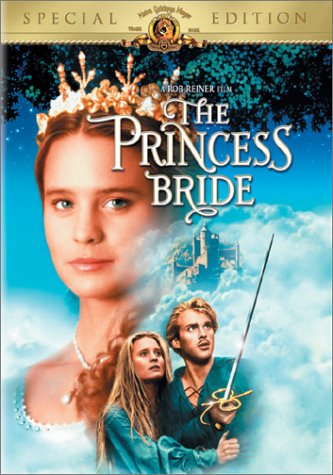
Review: The Princess Bride by William Goldman, and why you should read it. Immediately.


The more I participate in weekly memes, the more I’ve come to a disturbing realization. Try to prepare yourselves, for the shock and horror may be great:

Not everyone has read The Princess Bride.

Are you still with me? How’s your heart? Try to focus on your breathing. I know, the truth is hard to digest.

There is even a large portion of the population that does not realize that The Princess Bride was originally a book. They’ve seen the movie, and think it’s the original.

Don’t get me wrong. The movie is fabulous. Fabulous. But it’s not the original, and it’s certainly not as good as the book.

This review isn’t going to be a usual review. I’ll give you a nutshell intro to the plot (like you need it), then list the reasons why you need to read this book right now.

The Plot

Probably most of you know the basics of the story. Buttercup, the most beautiful girl in the world, falls in love with Westley, a worker on her family’s farm. Although they are deeply in love, Westley decides to sail to America to seek his fortune, and while at sea, his ship is attacked by the Dread Pirate Roberts, who never leaves a prisoner alive.

Buttercup’s mourning is cut short when the dastardly Prince Humperdinck decides to take a bride. He chooses Buttercup because of her astounding beauty, but she vows to never love him. He doesn’t really care, because his true purpose is to have her killed by mercenaries, hoping to incite his fictional country of Florin to go to war with the fictional country of Guilder.

Buttercup is kidnapped by mercenaries, Vizzini (a Sicilian), Fezzik (a Turk), and Inigo Montoya (a Spaniard). They are then perused and methodically defeated by a mysterious Man in Black, who steals Buttercup away from them.

You know what happens next.

Why You Need to Read The Princess Bride Immediately

(all quotes taken from the 1992 paperback version, copyright William Goldman):

“The Good Parts.” 

Here’s the blurb from the inside cover of my copy:

“As a boy, William Goldman claims, he loved to hear his father read the ‘S. Morgenstern classic, The Princess Bride.’ But as a grown-up he discovered that the boring parts were left out of good old Dad’s recitation, and only the ‘good parts’ reached his ears.

Now Goldman does Dad one better. He’s reconstructed the ‘Good Parts Version’ to delight wise kids and wide-eyed grownups everywhere.

What’s it about? Fencing. Fighting. True Love. Strong Hate. Harsh Revenge. A Few Giants. Lots of Bad Men. Lots of Good Men. Five or Six Beautiful Women. Beasties Monstrous and Gentle. Some Swell Escapes and Captures. Death, Lies, Truth, Miracles, and a Little Sex.

In short, it’s about everything.”

But of course, there never was any S. Morgenstern. There never was an “original” version of The Princess Bride that turned out to be more a history of Florin and Guilder than a story about True Love and Revenge. But the fact that Goldman writes it as if he’s extracting “the good parts” out of a boring history book just adds to the wit and charm of this book. He always inserts little notes in italics to let the reader know when he has “extracted” something. For example, at the beginning of Chapter 2, we have this note from Goldman:

“This is my first major excision. Chapter One, The Bride, is almost in its entirety about the bride. Chapter Two, The Groom, only picks up Prince Humperdinck in the last few pages.

This chapter is where my son Jason stopped reading, and there is simply no way of blaming him. For what Morgenstern has done is open this chapter with sixty-six pages of Florinese history. More accurately, it is the history of the Florinese crown.

Dreary? Not to be believed.”

– p. 59

He also interjects little pieces of “history” into the narrative so that we can orient ourselves:

‘I’m going to America. To seek my fortune.’ (This was just after America but long after fortunes.)”

– p. 50

The Dialogue

“‘I love you,’ Buttercup said. ‘I know this must come as something of a surprise to you, since all I’ve ever done is scorn you and degrade you and taunt you, but I have loved you for several hours now, and every second, more. I thought an hour ago that I loved you more than any woman has ever loved a man, but a half hour after that I knew that what I felt before was nothing compared to what I felt then. But ten minutes after that, I understood that my previous love was a puddle compared to the high seas before a storm. Your eyes are like that, did you know? Well they are. How many minutes ago was I? Twenty? Had I brought my feelings up to then? It doesn’t matter.’ Buttercup still could not look at him. The sun was rising behind her now; she could feel the heat on her back, and it gave her courage. ‘I love you so much more now than twenty minutes ago that there cannot be comparison. I love you so much more now than when you opened your hovel door, there cannot be comparison. There is no room in my body for anything but you. My arms love you, my ears adore you, my knees shake with blind affection. My mind begs you to ask it something so it can obey. Do you want me to follow you for the rest of your days? I will do that. Do you want me to crawl? I will crawl. I will be quiet for you or sing for you, or if you are hungry, let me bring you food, or if you have thirst and nothing will quench it but Arabian wine, I will go to Araby, even though it is across the world, and bring a bottle back for your lunch. Anything there is that I can do for you, I will do for you; anything there is that I cannot do, I will learn to do. I know I cannot compete with the Countess in skills or wisdom or appeal, and I saw the way she looked at you. And I saw the way you looked at her. But remember, please, that she is old and has other interests, while I am seventeen and for me there is only you. Dearest Westley–I’ve never called you that before, have I?–Westley, Westley, Westley, Westley, Westley,–darling Westley, adored Westley, sweet perfect Westley, whisper that I have a chance to win your love.’ And with that, she dared the bravest thing she’d ever done; she looked right into his eyes.” 

– p. 48

The way the characters talk is simultaneously cheesy, poetic, endearing, and absurd. It’s hard to not feel a profound sense of happiness when reading a conversation taking place in The Princess Bride.

The Backstory

The characters in the movie are wonderful and iconic. The book lets us know how they became that way. As an example, I present to you:

Inigo Montoya. He is the greatest swordsman that ever lived. He gives Westley a stirring 30-second speech about why he is a great swordsman, and why he is hunting The Six-Fingered Man. He has one of the most iconic lines in the movie: “Hello. My name is Inigo Montoya. You killed my father. Prepare to die.” He is awesome.

Book Inigo is just as awesome, but now we are treated to 16 pages of intriguing backstory about him and his father, their relationship, his father’s murder, his training to become the greatest swordsman who ever lived, and his constant search for The Six-Fingered Man.

“Domingo Montoya was funny-looking and crotchety and impatient and absent-minded and never smiled.

Inigo loved him. Totally. Don’t ask why. There really wasn’t any one reason you could put your finger on. Oh, probably Domingo loved him back, but love is many things, none of them logical.”

– p. 97

And of course, he also says his famous line in the book. Many times.

The Action

The film is full of swordfighting fun, and the book has even more. Plus, the book goes into even more detail about the different fencing techniques, which doesn’t sound interesting, but is. Remember the part in the movie where Inigo and The Man in Black are bantering while swordfighting about the different attacks and defenses they are using? Straight from the book, but the book has even more of that.

The Humor

I know you’ve probably picked up on this by now, but the book is hilarious. It’s not side-splitting give-you-the-hiccups kind of hilarious, although an unexpected guffaw will probably escape your lips several times while reading this. But it is leave-a-smile-plastered-across-your-face-constantly hilarious. It will give you happy feelings.

Westley

I know this is hard to believe, but book Westley is about 10x awesomer than movie Westley. True story.

Buttercup

I know that super-strong, independent, quick-thinking heroines are all the rage these days. Buttercup is not like that. Poor girl, she’s not the sharpest tool in the shed.

“‘Do you love me, Westley? Is that it?’
He couldn’t believe it. ‘Do I love you? My God, if your love were a grain of sand, mine would be a universe of beaches. If your love were—‘
‘I don’t understand the first one yet,’ Buttercup interrupted. She was starting to get very excited now. ‘Let me get this straight. Are you saying my love is the size of a grain of sand and yours is this other thing? Images just confuse me so—is this universal business of yours bigger than my sand? Help me, Westley. I have the feeling we’re on the verge of something just terribly important.’”

 – p. 51

She has beauty, and she has love, and that’s really all she has going for her. But it’s enough. She never learns to be a fighter, she never gets much cleverer or wittier, and she can’t wield a sword or shoot an arrow. But she has love, and it makes her strong.

““I am your Prince and you will marry me,” Humperdinck said.
Buttercup whispered, “I am your servant and I refuse.”
“I am you Prince and you cannot refuse.”
“I am your loyal servant and I just did.”
“Refusal means death.”
“Kill me then.” 

– p. 72

And last but not least, the book contains this line:

“The beef-witted featherbrained rattledskulled clodpated dim-domed noodle-noggined sapheaded lunk-knobbed BOYS.” 

– p. 36

So. There you have it. My case for why you need to read The Princess Bride. I hope you’re convinced. Even if you aren’t normally a fan of fairy tales, or love stories, or humor, you should read The Princess Bride. Because it’s magical and amazing and splendid.

And if by some cruel twist of fate you haven’t seen the movie either, I highly recommend it. It’s a beautiful and fabulous movie.

But you still need to read the book.

Content Guide: Contains violence and torture, murderous plots, grave danger, and R.O.U.S.s

Teaser Tuesdays (May 8): Die For Me

Teaser Tuesdays is a weekly bookish meme, hosted by MizB of Should Be Reading. Anyone can play along! Just do the following:

• Grab your current read
• Open to a random page
• Share two (2) “teaser” sentences from somewhere on that page
• BE CAREFUL NOT TO INCLUDE SPOILERS! (make sure that what you share doesn’t give too much away! You don’t want to ruin the book for others!)
• Share the title & author, too, so that other TT participants can add the book to their TBR Lists if they like your teasers!

My teaser today is from Die for Me by Amy Plum:

“My skin crawled as I tried to wrap my mind around the fact that some people…or revenants…whatever…experienced the pain of death not just once but repeatedly. By choice.”

– 45% of the way through Kindle version

Review: The False Price by Jennifer A. Nielsen (@nielsenwriter @Scholastic)

Received from Scholastic for review.

The False Prince is the first book in a new mid-grade medieval fantasy trilogy from Jennifer A. Nielsen. I received it in my big box of awesome from Scholastic, and am so glad it was in there. This book is seriously fantastic.

The Plot

The False Prince is the story of Sage, a 14-year-old orphan struggling to survive in the fictional kingdom of Carthya. At the opening of the book, Sage is purchased by Conner, a wealthy nobleman. Conner also purchases three other boys similar in age and appearance to Sage. The boys aren’t sure of the reason for Conner rounding up orphans, but they know it’s probably not good.

Soon, Conner reveals his plot: he intends to groom them to impersonate Prince Jaron, lost prince of Carthya, so that one of them can take over the throne and save the kingdom. They will have two weeks to transform into Jaron. One of the will be selected for a future of luxury and power. The other three, Conner implies, will not have much of a future at all.

Through the two weeks leading up to Conner’s selection, Sage and the other boys struggle to learn all the skills and knowledge befitting a prince, from swordplay and horseback riding to reading, table manners, and the history of Carthya. Their competition is fueled by the knowledge that not being chosen by Conner will result in a fate worse than any they faced in their previous lives as orphans.

My Thoughts

This book was so much fun to read. It was a refreshing change of pace from many of the other books I’ve been reading lately. The False Prince is a witty and engrossing story that doesn’t have a ton of action or adventure, but has plenty of intrigue fueled by engaging characters.

Sage narrates the book in the first person, but he only ever lets us know as much as he wants us to know. So there were several surprises throughout the course of the narrative, when Sage finally decided to clue us into a past action or motivation.

I loved the characters in this book. Nearly all of them were nuanced, with no clear-cut bad guys or good guys (at least until the end). Even Conner, with his devious and treacherous plot, keeps you guessing as to his true motivations. And while Sage starts out disliking his fellow princes-in-training, he eventually forms a tenuous friendship with them as we understand that they, too, are just 14-year-old boys that are in over their heads.

As for Sage himself, he was clever, witty, and reckless. He was frustrating at times, but what 14-year-old boy isn’t? It was exciting to see the story unfold through his eyes. And although Sage is indisputably the hero of this story, he has definite weaknesses and flaws, which is kind of refreshing. Too often I think male protagonists are just good at everything, and it gets annoying. Sage can indeed be annoying, but it’s not because he’s The Awesomest Ever. It’s because he’s a kid, and kids can be kind of annoying. But he was also likable and charismatic, and I was completely rooting for him.

And the story…I just loved it. It’s a fairly simple story that takes place almost entirely in the same setting (Conner’s estate). But the challenges the boys face, the constant threat of what Conner will do with the boys who are not chosen, and the slow revealing of the nature of the royal court of Carthya, made this book hard to put down.

Actually, it was impossible to put down. I thought I was going to put it down and go bed, and then a huge twist completely woke me up. So I wound up reading the entire thing in one day.

Although this is the first book in a trilogy, the ending wraps up the events in this book neatly. So you won’t find yourself frustrated with a cliffhanger ending. I kind of hate when a book ends on a cliffhanger, then I have to wait months (or more) to find out what happens. This one is open to sequels, but doesn’t need a sequel for you to feel satisfied.

I’d recommend this book to anyone, be they young teens or adults, male or female. It’s easy to read, totally engrossing, and left me feeling utterly content and happy at the end. Needless to say, I am eagerly awaiting the sequel!

Content Guide: Contains violence