Review: If I Stay by Gayle Forman (@gayleforman)

I’ve been hearing great things about If I Stay by Gayle Forman for a long time now, but I didn’t get around to reading it until one of my real-life friends mentioned that it (and its sequel, Where She Went) were among her favorite books. I figured if they’re her favorite books, she probably owns them, and so I asked to borrow them. I read both over the weekend of my brother’s wedding, then needed a few weeks to process them. They’re the kind of books I can’t form coherent thoughts about right off the bat.

But now I think I can (maybe) talk rationally about them. Although, for the purposes of this review, I’ll only be discussing If I Stay, because they are very different books.

The Plot (from Goodreads)

In the blink of an eye everything changes. Seventeen ­year-old Mia has no memory of the accident; she can only recall what happened afterwards, watching her own damaged body being taken from the wreck. Little by little she struggles to put together the pieces- to figure out what she has lost, what she has left, and the very difficult choice she must make. Heartwrenchingly beautiful, Mia’s story will stay with you for a long, long time.

My Thoughts

If I Stay alternates between Mia’s flashbacks of her life and her out-of-body experience after the accident, watching her friends and family react to what has happened to her, her parents, and her brother. We get to see snippets of her childhood, her interaction with her parents and brother, and the evolution of relationship with her boyfriend, Adam, and her best friend, Kim. Meanwhile, we’re also in the hospital, seeing how Adam, Kim, Mia’s grandparents and other extended family members are coping. And through it all, Mia has to decide if she’s going to succumb to her injuries or fight for her life; if the experiences she hasn’t yet had are worth the pain of the world she’d be returning to.

This book hurt to read. While Mia is a bit of a detached narrator, it was still devastating to view the scene of the crash through her eyes, and to experience each of her revelations with her throughout the book. But although there is lots of sadness and hardship in this book, there is also joy and humor. Mia had an overall happy life. She had parents who loved her, a boyfriend who was devoted to her, and friends that cared for her. She had a creative outlet in the cello that the people in her life may not have totally understood, but still supported.

In a way, that happiness made what happened to her that much harder to read about. Her losses were large and meaningful, and it made it easy to understand why she would debate whether or not she wanted to return to a life that had been stripped of so much. There was no clear-cut right or wrong answer, and no matter what she chose, it would have made sense. It also makes her ultimate choice a double-edged sword. I simultaneously agreed with her choice and regretted, along with Mia, what she gave up by making it.

The few annoyances I had with this book were actually not problems with the book, just bits of added realism for the characters. While Mia adored her parents, and they loved her fiercely, as she looked back on her life, she would reflect on some occasions with her parents that she thought were awesome and I thought were questionable parenting decisions. But of course, that’s because she’s a teenager and these are her parents, and I’m an adult, and a parent, so our perspectives are going to be very different. (Of course, that also has a lot to do with your personal parenting — and life — philosophy, and we all know there are as many of those in the world as there are people. So other parents may think Mia’s parents are the epitome of parenting, and that’s fine too). There were also a couple instances with Adam in flashback that made me raise an eyebrow or two, but again, I understood why they made sense for the characters.

One of my favorite aspects of the book was the use of music, and how Mia, her parents, and Adam were all musicians, albeit very different kinds. Whenever Mia was talking about how she felt playing the cello, or about how her parents or Adam talked about music, I continually thought, yes. This is how musicians think (while I’m not the virtuoso Mia is, I still have a musician’s brain). It made me want to go watch cello videos on YouTube (because there are some awesome cello videos on YouTube. Like this one. Or this one), or to sing, or to dust off my piano music. I loved how they all related through music, and while they approached it differently, they all understood that the music was the important thing.

If I Stay is a powerful and introspective look at life, love, family, friendship, and how everything we know can change in an instant. It was beautiful and haunting and sweet and sad, all at once. It’s not like any other book I’ve read, and it stuck with me for a long time after I turned the last page.

[Oh, also, I have no idea why the cover blurb says it will appeal to fans of Twilight. While it definitely could appeal to fans of Twilight, it is absolutely nothing like Twilight, except that it features a teen female protagonist with a boyfriend.]

Content guide: Contains graphic description of a devastating car accident, profanity, some sexual activity.

 

Discussion: Rooting for the Bad Guy

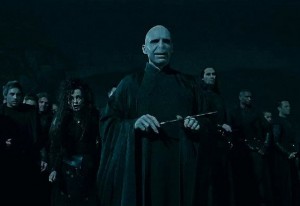
I’ve been thinking a lot lately about villains, and what makes a great one. And although I put a picture of good ol’ Voldy up here, I actually am of the opinion that if the Harry Potter series has a shortcoming (GASP!), it is in the characterization of Voldemort (don’t worry, I will still take Harry Potter’s shortcomings over most other series’ strengths any day). And this is because he spends over half the series as just Super Evil Supervillain Who is Evil for the Sake of Being Evil.

Later on, he got some back story, but it was never really enough to make me feel him as a character. He was simply a foil for Harry (and, you know, the rest of humanity), because having a mega-evil über-wizard as Harry’s nemesis made for some awesome story lines.

So. If Voldemort is not the epitome of all villains, who is?

I’m pretty sure you are not going to be able to predict my answer here. Please bear with me.

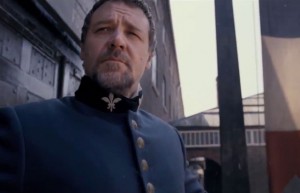
Yup, my favorite villain of all time is Inspector Javert from Les Misérables by Victor Hugo.

Don’t worry if you haven’t read the book, seen the movies, or heard the music. Because the reason I love him can translate to something you are familiar with.

Basically, Javert is a police officer who spends the entire story attempting to hunt down an escaped convict and return him to prison. He also tries to serve his country by infiltrating a renegade group of students who are fanning the flames of rebellion among the citizens of France.

And he’s the bad guy.

The reason he’s my favorite is because he’s so well developed, that if Victor Hugo had decided to write a Les Misérables companion novel from Javert’s POV, he could have easily become the protagonist. His motivations are solid, and he honestly believes he is doing the right thing throughout the entirety of the story by thwarting our heroes at every turn. He is the hero in his own story.

Switching from the book to the musical for a minute (which is absolutely not completely accurate to the book, but which I love and have seen live five times, and am immensely excited for the movie), Javert also sings my favorite song in the show. If you didn’t know anything about the story and just heard this song, you could believe that this is a hero’s anthem.

So stepping away from 19th century French literature for a moment, how does this apply to modern villains? To Voldemort and Umbridge, President Snow and Cato, Victoria and the Volturi?

I think there’s a few things that set a great villain apart from a decent villain.

Decent: Has a well-developed origin/back story.

Great: Has a well-developed,  somewhat sympathetic (not necessarily entirely, but at least partially sympathetic) origin/back story.

Decent: Has his/her own reasons for wanting to thwart the hero other than because they are supposed to.

Great: Has his/her own compelling and understandable reasons for wanting to thwart the hero. Note: These do not have to be sane reasons. Some of the best villains are complete loons with no moral center. But even with the craziest villains, we should be able to follow their reasoning, even if we don’t agree with it.

Decent: Is dark and scary and kind of a caricature.

Great: Is dark and scary and real.

Decent: Thinks he/she is the hero of his/her own story.

Great: If the story was told through his/her eyes, we could easily be convinced that he/she is the hero of the story, and that the hero is the villain.

So who are some great villains? Well, none of the ones I listed above, sadly. But here are some I do think are great, taken from movies, TV, and books.

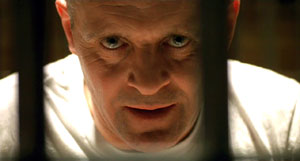
Hannibal Lecter, Red Dragon and Silence of the Lambs.

This would be a great example of the character being completely crazy. I don’t think he could ever convince any of us that his disturbing cannibalistic fashion statements were based on sane brain function. But even though he is certifiably nuts, he has a way of always making twisted, shiver-inducing sense. And that, to me, is the scariest part of his story.

Detective Jimmy ShakerRansom.

This isn’t the greatest movie ever, by any means, but I always thought Gary Sinise’s Detective Shaker was an amazingly nuanced and well-developed villain. If you haven’t seen this 1996 flick, I’d recommend it for Shaker alone.

Spike, Buffy the Vampire Slayer.

He was never a pure villain or a pure hero. Even when his mission in life was to kill our favorite sassy slayer, it was hard not to root for him. And even when he was trying to turn it around, you could sense the darkness just beneath the surface. Spike is one of my favorite characters of all time, in any medium, because of all these layers.

BoromirThe Fellowship of the Ring.

I have now officially seen the movie so many times that I can’t view Boromir objectively anymore — I can’t see any part of his slow succumbing to the ring without thinking of everything that follows — but I remember hating Boromir the first time I read Fellowship. But at the same time, it was so believable watching this gradual descent from a celebrated hero into a bitter man under the ring’s control. Speaking of which…

Gollum, The Return of the King

Granted, Gollum spends the entire Hobbit/Lord of the Rings series being villainous, but he reaches his most evil — and most sympathetic — in Return of the King. No matter how many times he deceived and sabotaged Frodo, I couldn’t help but feel my heart break for him just a little.

Severus SnapeHarry Potter.

Yes, I know that Snape’s status as a villain is up for serious debate, but I would argue that anyone who makes our hero that miserable for that long can be considered a villain, at least during the time the misery is occurring. But the fact that whether or not he even is a villain, despite the misery, is a testament to how well-developed his character is. Voldemort and Umbridge may not be on my list, but J.K. more than made up for it with Snape.

Darth VaderStar Wars.

I almost forgot one of my favorite nuanced villains, Anakin Skywalker a.k.a. Darth Vader. Ignoring for a second how terrible the prequels were (I used to think their one saving grace was the fight sequences, then I saw this, and now…), he totally embodies my theory that the best villains could actually be the hero if the story was told from their point of view. Anakin is the protagonist of the (awful) Episodes I-III and the villain of the (awesome) Episodes IV-VI. And that is kind of amazing.

Note: A story does not have to have an awesome villain to be successful. Lots of stories aren’t about a sentient antagonist, but are instead about heroes overcoming some other sort of conflict, and those stories can be just as good, if not better, than stories featuring intelligent, nuanced villains.

But if the foil to the hero is The Bad Guy, then I’d certainly hope the bad guy has a good reason for doing what he’s doing.

What do you think? Who are some of your favorite villains, and why do you love to hate them (or hate to love them)?

Feature and Follow (September 21) – Book Worth the Hype

Welcome to the Feature & Follow Hop, hosted by Parajunkee’s View and Alison Can Read!

If you’re here for the first time, I’d love if you could follow via email, RSS, LinkyFollowers or Networked Blogs. Just let me know your follow method of choice in the comments, and I’ll be happy to return the favor.

And if you’re not new, welcome back! Repeat visitors are better than NOT PACKING. (Did I mention we’re in the middle of a move?)

Today’s question is:

What hyped-up book IS worth all the hype?

Did you even have to ask? Harry Potter. Hands down.

Honorable mentions to: The Hunger GamesThe Fault in Our Stars, The Help, Outlander

But Harry Potter wins. Harry Potter will ALWAYS win.

Throwback Thursday (September 20) – The Andromeda Strain


Welcome to Throwback Thursday, a weekly meme hosted by The Housework Can Wait and Never Too Fond of Books!

It’s the nature of book blogging to focus mainly on new releases, but there are thousands of great books out there that haven’t seen the “New Releases” shelf in years. We hope to be able to bring attention to some older titles that may not be at the top of the current bestseller list, but still deserve a spot in your To-Be-Read pile.

You don’t have to be a book blogger to participate! You can put up a Throwback Thursday post on your non-bookish blog; or if you don’t have a blog at all, just use the comments to tell us about a book you remember fondly.

Here’s how it works:
1. Pick any book released more than 5 years ago. Adult, YA, Children’s; doesn’t matter. Any great book will do.
2. Write up a short summary of the book (include the title, author, and cover art) and an explanation of why you love it. Make sure to link back to The Housework Can Wait and Never Too Fond of Books in your post.
3. Link up your post at The Housework Can Wait or Never Too Fond of Books.
4. Visit as many blogs as you can, reminisce about books you loved, and discover some “new” books for your TBR list!

Feel free to grab the Throwback Thursday button code from the sidebar to use in your posts.

Thanks for participating, and we look forward to seeing which books you choose to remember!

My Throwback this week is…

The Andromeda Strain by Michael Crichton

I’ve tried to be varied in my Throwback Thursday picks, but the truth is, I am limited to what I read in years past, and in high school and college I read a lot of Michael Crichton. As in, all of his books. So he’s just going to have to be a recurring theme in my Throwbacks.

The Andromeda Strain is very heavily focused on the “science” part of science fiction, as the vast majority takes place in a top-secret lab where a bunch of scientists are conducting experiments on a tiny piece of alien rock that managed to wipe out an entire town. And if you don’t like lots and lots of techno-babble and science-speak in your sci-fi, then this book (and Michael Crichton, in general), are probably not for you.

I, however, am a big nerd and think that sort of stuff is awesome.

Even though this book has a claustrophobic setting and a tiny assortment of characters, and even though most of it is devoted to science experiments involving monkeys and microscopes, I love this book. Michael Crichton really was the master of weaving enough half-truth and near-plausibility into his sci-fi to make it seem like something that could actually happen.

Also, this book has been made into both a film and a mini-series, and neither one did it justice (although if you must watch one, the 1971 film is marginally better). Hollywood, please do it again, and do it right this time.

This is a blog hop! Link up your Throwback Thursday post below!

Review: What’s Left of Me by Kat Zhang (@KatZhang @harperteen)

Received an advance digital review copy from Edelweiss

I’ve been interested in What’s Left of Me, the debut by Kat Zhang, since I first heard of it. The premise was intriguing – two people trapped in the same body, fighting for dominance? But unlike in other books exploring a similar theme, like The Host, the characters in this book are actually born that way? I sensed potential for greatness. And when I realized Kat was another Nashville author whom I would have the opportunity to meet, that sealed the deal. I needed to read this book ASAP.

The Plot (from Goodreads)

Eva and Addie started out the same way as everyone else—two souls woven together in one body, taking turns controlling their movements as they learned how to walk, how to sing, how to dance. But as they grew, so did the worried whispers. Why aren’t they settling? Why isn’t one of them fading? The doctors ran tests, the neighbors shied away, and their parents begged for more time. Finally Addie was pronounced healthy and Eva was declared gone. Except, she wasn’t . . .

For the past three years, Eva has clung to the remnants of her life. Only Addie knows she’s still there, trapped inside their body. Then one day, they discover there may be a way for Eva to move again. The risks are unimaginable-hybrids are considered a threat to society, so if they are caught, Addie and Eva will be locked away with the others. And yet . . . for a chance to smile, to twirl, to speak, Eva will do anything.

My Thoughts

This book took some getting used to, because of the unnatural (yet accurate for the story) use of pronouns and verb conjugations. Because there are two people sharing one body, you get paragraphs like this:

“Kind of,” Addie said. She managed to keep our voice bland despite Hally’s dogged high spirits, but our fingers tugged at the bottom of our blouse. It had fit at the beginning of the year, when we’d bought all new uniforms for high school, but we’d grown taller since then. Our parents hadn’t noticed, not with — well, not with everything that was happening with Lyle — and we hadn’t said anything.

“Want to come over?” Hally said.

Addie’s smile was strained. As far as we knew, Hally had never asked anyone over.

– page 8, What’s Left of Me

Keeping in mind that all those “our”s and “we”s are talking about two individuals sharing the same body. Sometimes Addie acts independently of Eva, sometimes they act together. Sometimes people are addressing both of them, sometimes just one. You’d think it would be really confusing, but it’s not once you get used to it. I do, however, feel sorry for Kat’s editor. Grammarcheck would have had a hard time with this one.

I really liked that this story was told from the perspective of Eva, the recessive soul. It was fascinating watching Eva and Addie’s sibling dynamic, when one of them had only a voice and no body. They could communicate with each other, but Eva couldn’t speak with their voice to anyone else. So lots of times, Eva sat helplessly inside their body, urging Addie toward a course of action, only to have to suffer the consequences when Addie made a different choice.

Although it wasn’t a major plot point of the book, I was completely fascinated by the family dynamics in the book. Eva and Addie’s parents both, at some point during their lives, tell them that they love both of them. But at the same time, they urge Eva to fade away, and for Addie to assert her dominance. It’s such a weird and challenging concept — how should a parent’s love be affected by having two children inhabiting the same body? And should they mourn the “death” of one for the good of the other, or should they simply accept it as the way life works? Eva, obviously, feels hurt by the withdrawal of her parents’ affection — from her, not Addie — even as she tries to tell herself it’s normal for them to stop talking to her. Again, this isn’t actually a huge part of the story, but it was such an interesting question to me.

And the question necessarily expands to intertwine with the main narrative. Should one soul be forced to fade away, or do both have a right to share the body? And if both souls have equal rights to the body, who gets to choose what they do? If one soul is romantically attracted to someone and the other is not, which gets to follow their heart?

As Eva and Addie struggle with these philosophical questions, they have to deal with the physical problem of being taken and incarcerated if their hybrid nature is discovered. And so in addition to the internal struggle, there is a lot of external action, adventure, and peril. Even a touch of romance, although that too becomes a delicate and challenging situation. It’s a great mix, and I was completely sucked in.

Eva’s narration is sparse but effective, and the storytelling flowed nicely. There’s still some huge questions at the end of the book, but it’s not a cliffhanger. Truthfully, I don’t know if it’s possible to fully and neatly answer all of the questions raised by this book, so in that way, it would actually work as a standalone (even though it’s the first of a trilogy). Oh, and although it’s being touted as a dystopian, it’s really not. Nor is it really sci-fi. More of an alternate reality. It’s one of those books that’s kind of hard to define, which I think actually broadens its appeal.

I thought this book was really good, but it didn’t completely knock me off my feet. I feel like it could, and I’m almost expecting that from the sequel. But while this one was highly enjoyable, it didn’t quite crack that amorphous bubble that houses my all-time favorites. That said, I still highly recommend it.

Content guide: Contains some violence